MAIN POLICY OPTIONS: LIBERAL moderates and progressives, the Democrats.
again is an issue about the transition from absolutism to liberalism. Miguel Artola Following these two concepts are interesting: Tuesday, January 12, 2010
Cost To Replace Fridge Thermostat
POLITICAL SYSTEM: A set of participants involved in decision-making and political norms
POWER SYSTEM: institutions - educational, administrative and judicial responsible for imposing ...- society's acceptance and implementation of such decisions. OLD REGIME
political system would be one in which the monarch has the total (embracing) the right to determine how many and who must participate in the political system, including the ability to modify at will the rules governing the decision-making ... Sovereignty of the monarch. POWER SYSTEM
legally heterogeneity of territories (jurisdictions) and groups (privileges) - and institutional heterogeneity. Irrationality. LIBERAL SYSTEM
POLITICAL SYSTEM: political participation is a generalized right of the citizens. Begins to be restricted (based on census suffrage) to go to expand (universal suffrage). There is no right to alter the fundamental political norms. Only the Constituent can change the constitution. The "craving" the king is reduced to the provision of political office, especially ministers. Theory: Sovereignty
national
POWER SYSTEM: rationalization, standardization and centralization, maximize yields.
Liberals are mainly bourgeois, ie the social group that has been enriched, mainly from trade and business, in Spain there is little industrial bourgeoisie, some are former nobles. In fact there is little bourgeoisie. Not really represent the people. Are few, and they do not defend the people, speaking on behalf of the people, but their theories will benefit them. Defend:
- Equal rights: to end the charters and privileges. This ensures the equality of opportunity.
- Division of powers: the legislative power with the courts (or the courts with the king), King has the executive.
- The power comes to the king, the courts and the rest of the administration of the nation: national sovereignty
- The State is not the king, as in the Old Regime. The king is only his head (or chief executive)
- The king must also obey the laws
- Public officials (the mayor to minister) are not for the noble, but for the most able. Not appointing the feudal nobles and in courts. (Although falling into the hands of the nobles)
- Economic Freedom, contracting and trades mainly
- Abolition of the Guilds
- Safeguarding the right to private property
- Prevent the land is depreciated, ie, bound by law: in the hands of an entailed estate or a monastery, for example.
- The state should only ensure that that is true there is security and maintenance of roads ...
- have to end the estate society and is of a class society (rich and poor)
For all it needed to regulate a constitution. Within
liberals are two streams:
doctrinaire liberalism or moderate: Double
sovereignty, and Crown Courts. Shared sovereignty. The crown has the executive power and the "moderator." Sugragio selected there. Defend the rights and legal equality individual. Gentry and nobility. Intervention by central government.
we talk about moderate, first time during the triennium liberal on doceañista. The evolution of policy from the Constitution of 1837 continued a trend toward right-wing sector of liberalism, conservatism. The agenda of conservatism due to some ideological records and also features a social and biographical backgrounds very specific. In its initial stage was known as fusion or stationary, ie conservative. Among its members were former employees of Fernando VII in the final stages of government, bureaucrats, former doceañista Liberals disappointed and strongly influenced by the ideas of French doctrinaire liberalism.
moderate model was, above all, pragmatic (practical). On the one hand sought to assimilate the beliefs or institutions accumulated tradition and liberal ideas, to form own way, traditional and modern. On the other side were more attentive to the economic interests of the social forces of the political principles. They are men of order. His concern was to build a unitary state and secure, served by a centralized administration.
For all the moderates, the revolution ended with the 1837 Constitution, which made interpretation restrictive. If advanced further, which would be a "popular overflow", violence and anarchy. The brake was a limited exercise of political rights, which is justified for very different reasons. Andrés Borrego spoke of "sovereignty of reason" and Donoso Cortes, the "sovereignty of the intelligence." Alcalá Galiano was assured that where physical and moral power must also be political. All these statements concluded that the power should be in a legitimate aristocracy "natural" no longer were exclusively those of the ancien regime, but also the middle class and upper middle class "capabilities." The government of the best in nature
Later, with the rise of Narváez, within the moderate there are three trends:
- The far right sector, represented by the Marquis de Viluma, who wanted a return to the Statute Real reconciliation with the Carlist through marriage with the queen and even some form of corporate representation in the parliamentary system.
- On the left, the Puritan sector, led by Joaquín Pacheco, who wanted to reconcile with the progressives, and was willing to uphold the Constitution of 1837.
- In the center, where Narvaez stood, and others from different backgrounds and Martinez Rose, Alcalá Galiano (doceañista), old illustrated as López Ballesteros and bureaucrats as Alejandro Pidal y Mon
progressive or radical Liberalism
The legislative power was only Cortes. Only the courts could do the Constitution and the king should jurarlas number greater political participation. Based on census suffrage is higher. Freedom of the press. Also only individual rights. Never come to power legally, they are called as a last resort after the Revolution or urban uprisings.
born in the three years as the so-called liberal veinteañistas. Although based on census suffrage remained tended to make it wider, while they wanted to give greater autonomy to local authorities and expand freedom of the press. Were very characteristic of national sovereignty and defense of the National Militia. That explains the confrontation with the moderate (reflected in the confrontation between Maria Cristina and Espartero). In local elections in late 1839 won the progressives, especially in the Mediterranean, Andalusia and Madrid. The moderate government's response was the adoption in Parliament of a new local law that would allow the central to municipal control. The ensuing riots brought to the regency of Maria Cristina and the beginning of Espartero.
are most sympathetic in the middle class means land owners, merchants, manufacturers and university intellectuals. Until the mid-50 had the sympathy of the masses. Especially in urban areas. In defending the free trade economic issues (or economic liberalism), were based on the idea that the best way to overcome the country's problems was to address economic development, eliminating the barriers to trade. Another important point was to suppress the "blood tax", ie compulsory military service by the system of conscription. In favor of well-paid professional army and taught.
Democrats:
maximalist interpretation of sovereignty. Universal suffrage, popular sovereignty, social rights such as freedom of assembly and association, social justice. They appear as the first left wing Republicans.
Around 1841, come the Democrats, especially those political groups that made the explicit declaration of republicanism and obtained a significant number of votes in the city. A program of the left with social measures such as land distribution disentailed, the general diffusion of education or decrease the military budget. However, this emerging sector was a major Republican no danger to Espartero.


Monday, January 11, 2010
Do You Develop Tolerance To Cat Allergies?
6. Colonial war and crisis of 1898
I. INTRODUCTION. American Politics. The Monroe Doctrine and Manifest Destiny. The U.S.
were already a world power and were building their empire. Was supported by a thriving economy that required new markets to place the surplus production and capital. After the Civil War (1861-65) and after the Second Industrial Revolution, when they were born the great trusts (Rockefeller, Ford ...). These are the years in which the conquest of the West ends and where the concept of "border " is installed in the ideological heart of Americans. This makes sense
the Monro Doctrine e: "America for Americans" (1823), and the racial doctrine of Manifest Destiny , defending the racial superiority of life, economic and political America. Under this doctrine, the Divine Providence directs the Americans show the world the true freedom and democracy. This justifies the American intervention in foreign countries.
When they could try the "dollar diplomacy" or bought or launched territories to conquer. In the war of Mexico conquered New Mexico, Alta California and Texas. However, the area of \u200b\u200bpreferred stock was Pacific and the Caribbean, so we will undertake the construction of the Panama Canal and will face Spain in Cuba and Puerto Rico. We could also speak of the doctrine of "naval" U.S. Admiral Alfred T. Mahan, who conceived of as the only naval power capable of providing a global power state, which appeared in the 90
II. COLONIAL DISASTER. War of Cuba and the Philippines
Since the mid-nineteenth century had begun in Cuba a profound economic transformation that helps to explain their independence back. Almost half of exports were bound for U.S. while the share directed toward Spain was much lower. At the end of the century exports 90% of snuff, and sugar to the United States of cotton receiving. The exportation of Cuban sugar was becoming increasingly sophisticated, which allowed discontinuation of slavery, but he had competition from beet. Cuba was very important for the Catalan textile industry, as well as the entrepreneurs on the island possessions. USA made four attempts to buy the island from Spain, but the politicians of the day believed that Cuba could not leave without a fight.
The first movements were during the Glorious Revolution, when one of the wealthy landowners Cuban, Manuel de Céspedes, started the war with Spain for the independence of Cuba, on his estate at La Demajagua, near Yara, is the Grito de Yara Long War begins. Cánovas Martínez fields sent to pacify the island. Zanjón Peace (February 1878) agreed to a regime of autonomy to the island, but families with economic interests in the West Indies prevented its implementation. So it went from frustrated autonomism separatism. It's the Little War (1895-1898).
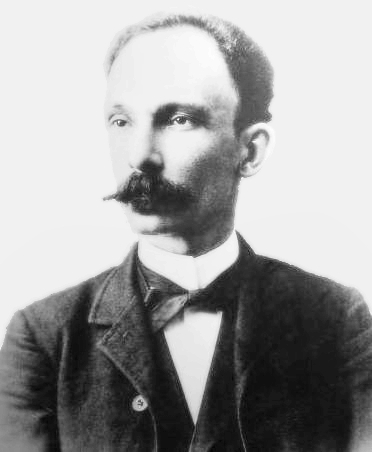
There are two parties in Cuba, the Liberal Autonomist Cuban Constitutional Union of Cuban planters. In 1892 Antonio Maura, Minister of Overseas proposes a self-government for Cuba and the Philippines. Is rejected in Parliament by Cuban pressure and resigned (he was called unpatriotic, fanatic or filibuster). Then there is the figure of José Martí, a poet, lawyer and journalist Cuban exile in the United States when the war failed Long (Ten Years War). His thesis was that war with Spain was "just and necessary." The Cuban Revolutionary Party founded in 1892 and lead the war for independence, which was re-opened within 1895 (Grito de Baire). The failure of the autonomist cause the independence movement, José Martí, Máximo Gómez and Antonio Maceo will
leaders
For U.S. the war in Cuba was even more important than for Spain. It was becoming a world power and did not want an independent Cuba. Earth's military capacity was lower, but not artillery. For its part Cánovas had the position of "raising questions of force, or more properly speaking, do not expect a solution but force." The weakest must bow to the strongest.
Puerto Rico did not pose serious problems, since it had achieved its independence, slavery had been abolished and the economy was headed by a powerful elite that controlled the grassroots movements.
Insurrection Cuban took over in 1895 as a result of relief in the party in power. Sagasta was replaced by Cánovas Martínez Campos sent a peacekeeping hoping to repeat the previous years. During the uprising of 1895 began with the cry of Baire and had been imposed on much of the island, especially in the east. His guerrilla methods was widespread support among the rural population. Its leaders were José Martí, and then Maximo Gomez, who along with Antonio Maceo started the uprising in the eastern part of the island. It became harder. General Weyler was sent very hard in the guerrilla struggle. The procedures used consisted of concentrating the rural population, isolating the rural population of the separatist guerrilla and rebel territory by quoting the barriers or "trail", with undoubted brutality. We also have to have yellow fever, typhoid and malaria.

Cánovas is autonomous reforms, sectors that do not meet his own party (Romero Robledo) or Americans. In May 1897 the U.S. recognized Cuban belligerency, it is permissible to help the insurgents. The assassination of Canovas (1897) changed the situation. Half the island was pacified by the harsh tactics of Weyler, but the action was to come policy. Weyler was replaced by General White was instructed to confine itself to fighting only in areas controlled by the English army. In November, granted a broad amnesty, universal suffrage, equal rights between island and peninsular and tariff autonomy, but the politics of Moret late.
Coinciding with the Cuban insurrection, there was also in the Philippines. The English presence was weak, especially missionaries, and export and use as a snuff trade with China. A key role was as a secret association, the Katipunan (Meeting), founded by Andrew Bonifacio political purposes (independence of the Philippines) and civic (help) but its most important figure is Jose Rizal. The movement was severely repressed and Jose Rizal was eventually executed. Biacnabató pact ended the insurrection. It was U.S. intervention that caused the final uprising of the Filipinos.
The situation changed in the year 1898. The explosion of the "Maine" was attributed to accelerated testing and English without war. U.S. made a proposal to purchase the island for $ 300 million. On April 18 the two chambers of the legislature passed a resolution, an ultimatum to Spain. Cuba was be independent, had to withdraw from the island and authorized the U.S. president. Mac Kinley to mobilize the military mechanisms to achieve these objectives. The document refers to "the horrible conditions there [were] in Cuba [had been] three years, ie since February of 1895 outbreak of the second war for Cuban independence. Argue that it is a duty as a world power as a model of freedom and democracy, by geographical proximity to the island and, above all, the "destruction of a battleship" who was "visiting." The news of this decision was in Spain patriotic demonstrations. War was inevitable.
The "Maine" was actually on the island called by the American consul to protect American citizens resident in the island and its collapse could not be justified, not by Americans or by the English. However, were the major American media moguls (Pulitzer and William Randolph Hearst ) stirred up the indignation that the U.S., "Remember the Maine, the infieno with Spain." U.S.
That gave as an excuse to pacify the island couple involved was evident, and the English government was firm in avoiding conflict and declared a cease-fire .. There were also supporters of U.S. non-intervention. It was not just solidarity with the Cubans, since these do not recognize the independence of Cuba, but only the "right to be free and independent" and only required Spain to abandon the island did not give them the status of nation. Anyway, the U.S. pledged to give up the island (paragraph four). Senator Teller was responsible for this part was it truly humanitarian? Some believe he was defending his state of Colorado, producer of sugar beet against Cuban cane sugar. Anyway Cubans welcomed the American intervention, which had sent arms and ammunition, despite being prohibited.
The war began to have its outcome in the Philippines, where the situation seemed to be dominated by the English. The direct intervention of the Americans decided to expand (Hawaii. ..) crushed the English fleet at Cavite. In Spain, the news received social outcry little political significance.
Regarding Cuba, the English authorities decided to send the fleet of Admiral Cervera, who arrived in May and was blocked in the city of Santiago. The pressure of public opinion and the government's attitude eventually lead to the departure of the fleet and its sinking in early July. Soon after came the surrender of Santiago and in the month August, Washington signed the protocol, equivalent to an armistice.
By the Treaty of Paris (December 1898) Spain ceded the Philippines, Puerto Rico and Guam to the United States and granted independence to Cuba. In the Philippines there was a longstanding guerrilla war against the Americans, who had to maintain an army of occupation. Cuba had a nominal independence for America.
The Treaty of Paris did not mean the complete disappearance of all the old English Empire, but was quickly established. Germany Spain sold the islands of the Marianas, Carolines and Palau (1899). Spain lacked the capacity to act as a colonial power and had to undergo the strongest, who practiced a colonial redistribution. Spain was reduced to the status of small colonizing European power whose prospects were limited to Africa (Morocco, Ifni, Guinea, Fernando Poo), whose strategic interest was to control the Strait
III. CONSEQUENCES OF 98.
a) Policy Implications
No general reactions to the disaster. For the political class was essential to achieve stability of the political system. There was a sector of the Conservative Party (Romero Robledo) that economic interests (land, maritime transport) was favored colonial system maintenance. But there were too many cases of opposition to the war. Neither Carlist or Republicans who favored a settlement illustrated, but they were patriotic demagoguery to the disaster. There were no major institutional changes or state crisis. We used the rhetoric of "regeneration", but changes were not political.
economic interests of the war depended on the relationship with Cuba. Catalan industrial circles were the most stressed in the colony (they sold their tissues), while farmers and miners Basque Spaniards were more reformist. The Church was interested in the Philippines. Sectors popular and workers clashed not strong (no, there was a large number of dropouts). Most were against the PSOE. The anarchists were contradictory. Feds accept Cuba as a more federated state. Basque nationalists were against, and the Catalans were more moderate.
The greatest impact was the official policy of the parties. Silvela government lasted only one and a half, from the moment of defeat and the signing of a peace treaty until early 1901. Silvela represented in the Conservative Party opposite of Romero Robledo, a commitment to transformation and moralization of political life, which will have the expression of regeneration. Report that "Spain without a pulse." His short government showed some willingness to renew, giving tickets to new figures in politics and the general Polavieja (regeneracionista character) or the conservative regionalist Durán and Bas. It began a policy reform, decentralization and fiscal policy that would eliminate the deficit of the war based on raising taxes. This led to increased criticism and strikes, which led to stalled reforms.
b) The regeneracionismo.
The loss of 98 plunged the company into a state of disappointment and frustration, which corresponded to the gloomy image to the outside. The colonial crisis led to the emergence of movements that criticized the system of the Restoration, which coincided with an international cultural environment ideological crisis [1] . After the 98 came a series of moves regenerationists, which received some support from the middle classes.
The best example, with characters like Picavea Macías, is that of Joaquín Costa, denouncing the "oligarchy and despotism, corruption of the system of the Restoration. Called for modernizing the country (hydrographic plan swamps and irrigation) and solve the problems of illiteracy and poverty ("school and pantry "), with land reform (National League of Producers) forgetting the past (take seven keys to the tomb of the Cid"). Other figures of regeneration was Silvela Francisco, the new leader of the Conservative Party and his famous article "Spain without a pulse." This regeneracionismo came to advocate the arrival of a "surgeon with an iron hand" to cut to the chase the corrupt political class.
Cuba's disaster gave cohesion to the Generation of 98, where writers come together from many sources and styles, but with the common bond of a disenchantment with English life (the first modern examples Machado, Vale Inclán and Juan Ramón Jiménez, tragic analysis of Unamuno or sullen Pio Baroja). Pessimism and anxiety about identity, what is Spain? The solution is to Castilla.
Figure Ortega y Gasset is also essential in this atmosphere of pessimism, historicist analysis of vitalism ("I am myself and my circumstance") leads to a concern about the "Invertebrate Spain" (by peripheral nationalist) and "revolt of the masses." Ortega's philosophy comes to raise a certain elitism of people who find their vocation of cultural and political leaders.
Finally, defeat military was a change in the mentality of the military, who were passing to more authoritarian attitudes as a reaction to anti-militarism which followed the "disaster." Convinced that the defeat had been caused by the interference of politicians and the parliamentary
III. International situation (optional)
As regards the U.S., not Cuba be annexed, which was ruined and devastated, but made it their protectorate, occupying military between 1899 and 1902, under the pretext of providing the necessary conditions policy for a solo career. In 1901 the Platt Amendment, authorizing intervention in the island defend when deemed necessary. Was in force until 1934. Cuba achieved its political independence in 1902 and Tomás Estrada Palma became the first president of the Republic of Cuba, but always operated by the United States until Castro's revolution turned to the Soviet bloc.
was an imperialist war, provoked by the United States, in which Spain lost Cuba without the Cubans they won.
[1] are the times of Marx, Nietzsche and Freud, the masters of suspicion. The modes of production are obscured by ideology, lies and truth are only reflections of the will to power and in fact is the unconscious who governs us. 
I. INTRODUCTION. American Politics. The Monroe Doctrine and Manifest Destiny. The U.S.
were already a world power and were building their empire. Was supported by a thriving economy that required new markets to place the surplus production and capital. After the Civil War (1861-65) and after the Second Industrial Revolution, when they were born the great trusts (Rockefeller, Ford ...). These are the years in which the conquest of the West ends and where the concept of "border " is installed in the ideological heart of Americans. This makes sense
the Monro Doctrine e: "America for Americans" (1823), and the racial doctrine of Manifest Destiny , defending the racial superiority of life, economic and political America. Under this doctrine, the Divine Providence directs the Americans show the world the true freedom and democracy. This justifies the American intervention in foreign countries.
When they could try the "dollar diplomacy" or bought or launched territories to conquer. In the war of Mexico conquered New Mexico, Alta California and Texas. However, the area of \u200b\u200bpreferred stock was Pacific and the Caribbean, so we will undertake the construction of the Panama Canal and will face Spain in Cuba and Puerto Rico. We could also speak of the doctrine of "naval" U.S. Admiral Alfred T. Mahan, who conceived of as the only naval power capable of providing a global power state, which appeared in the 90
II. COLONIAL DISASTER. War of Cuba and the Philippines
Since the mid-nineteenth century had begun in Cuba a profound economic transformation that helps to explain their independence back. Almost half of exports were bound for U.S. while the share directed toward Spain was much lower. At the end of the century exports 90% of snuff, and sugar to the United States of cotton receiving. The exportation of Cuban sugar was becoming increasingly sophisticated, which allowed discontinuation of slavery, but he had competition from beet. Cuba was very important for the Catalan textile industry, as well as the entrepreneurs on the island possessions. USA made four attempts to buy the island from Spain, but the politicians of the day believed that Cuba could not leave without a fight.
The first movements were during the Glorious Revolution, when one of the wealthy landowners Cuban, Manuel de Céspedes, started the war with Spain for the independence of Cuba, on his estate at La Demajagua, near Yara, is the Grito de Yara Long War begins. Cánovas Martínez fields sent to pacify the island. Zanjón Peace (February 1878) agreed to a regime of autonomy to the island, but families with economic interests in the West Indies prevented its implementation. So it went from frustrated autonomism separatism. It's the Little War (1895-1898).
There are two parties in Cuba, the Liberal Autonomist Cuban Constitutional Union of Cuban planters. In 1892 Antonio Maura, Minister of Overseas proposes a self-government for Cuba and the Philippines. Is rejected in Parliament by Cuban pressure and resigned (he was called unpatriotic, fanatic or filibuster). Then there is the figure of José Martí, a poet, lawyer and journalist Cuban exile in the United States when the war failed Long (Ten Years War). His thesis was that war with Spain was "just and necessary." The Cuban Revolutionary Party founded in 1892 and lead the war for independence, which was re-opened within 1895 (Grito de Baire). The failure of the autonomist cause the independence movement, José Martí, Máximo Gómez and Antonio Maceo will
leaders
For U.S. the war in Cuba was even more important than for Spain. It was becoming a world power and did not want an independent Cuba. Earth's military capacity was lower, but not artillery. For its part Cánovas had the position of "raising questions of force, or more properly speaking, do not expect a solution but force." The weakest must bow to the strongest.
Puerto Rico did not pose serious problems, since it had achieved its independence, slavery had been abolished and the economy was headed by a powerful elite that controlled the grassroots movements.
Insurrection Cuban took over in 1895 as a result of relief in the party in power. Sagasta was replaced by Cánovas Martínez Campos sent a peacekeeping hoping to repeat the previous years. During the uprising of 1895 began with the cry of Baire and had been imposed on much of the island, especially in the east. His guerrilla methods was widespread support among the rural population. Its leaders were José Martí, and then Maximo Gomez, who along with Antonio Maceo started the uprising in the eastern part of the island. It became harder. General Weyler was sent very hard in the guerrilla struggle. The procedures used consisted of concentrating the rural population, isolating the rural population of the separatist guerrilla and rebel territory by quoting the barriers or "trail", with undoubted brutality. We also have to have yellow fever, typhoid and malaria.
Cánovas is autonomous reforms, sectors that do not meet his own party (Romero Robledo) or Americans. In May 1897 the U.S. recognized Cuban belligerency, it is permissible to help the insurgents. The assassination of Canovas (1897) changed the situation. Half the island was pacified by the harsh tactics of Weyler, but the action was to come policy. Weyler was replaced by General White was instructed to confine itself to fighting only in areas controlled by the English army. In November, granted a broad amnesty, universal suffrage, equal rights between island and peninsular and tariff autonomy, but the politics of Moret late.
Coinciding with the Cuban insurrection, there was also in the Philippines. The English presence was weak, especially missionaries, and export and use as a snuff trade with China. A key role was as a secret association, the Katipunan (Meeting), founded by Andrew Bonifacio political purposes (independence of the Philippines) and civic (help) but its most important figure is Jose Rizal. The movement was severely repressed and Jose Rizal was eventually executed. Biacnabató pact ended the insurrection. It was U.S. intervention that caused the final uprising of the Filipinos.
The situation changed in the year 1898. The explosion of the "Maine" was attributed to accelerated testing and English without war. U.S. made a proposal to purchase the island for $ 300 million. On April 18 the two chambers of the legislature passed a resolution, an ultimatum to Spain. Cuba was be independent, had to withdraw from the island and authorized the U.S. president. Mac Kinley to mobilize the military mechanisms to achieve these objectives. The document refers to "the horrible conditions there [were] in Cuba [had been] three years, ie since February of 1895 outbreak of the second war for Cuban independence. Argue that it is a duty as a world power as a model of freedom and democracy, by geographical proximity to the island and, above all, the "destruction of a battleship" who was "visiting." The news of this decision was in Spain patriotic demonstrations. War was inevitable.
The "Maine" was actually on the island called by the American consul to protect American citizens resident in the island and its collapse could not be justified, not by Americans or by the English. However, were the major American media moguls (Pulitzer and William Randolph Hearst ) stirred up the indignation that the U.S., "Remember the Maine, the infieno with Spain." U.S.
That gave as an excuse to pacify the island couple involved was evident, and the English government was firm in avoiding conflict and declared a cease-fire .. There were also supporters of U.S. non-intervention. It was not just solidarity with the Cubans, since these do not recognize the independence of Cuba, but only the "right to be free and independent" and only required Spain to abandon the island did not give them the status of nation. Anyway, the U.S. pledged to give up the island (paragraph four). Senator Teller was responsible for this part was it truly humanitarian? Some believe he was defending his state of Colorado, producer of sugar beet against Cuban cane sugar. Anyway Cubans welcomed the American intervention, which had sent arms and ammunition, despite being prohibited.
The war began to have its outcome in the Philippines, where the situation seemed to be dominated by the English. The direct intervention of the Americans decided to expand (Hawaii. ..) crushed the English fleet at Cavite. In Spain, the news received social outcry little political significance.
Regarding Cuba, the English authorities decided to send the fleet of Admiral Cervera, who arrived in May and was blocked in the city of Santiago. The pressure of public opinion and the government's attitude eventually lead to the departure of the fleet and its sinking in early July. Soon after came the surrender of Santiago and in the month August, Washington signed the protocol, equivalent to an armistice.
By the Treaty of Paris (December 1898) Spain ceded the Philippines, Puerto Rico and Guam to the United States and granted independence to Cuba. In the Philippines there was a longstanding guerrilla war against the Americans, who had to maintain an army of occupation. Cuba had a nominal independence for America.
The Treaty of Paris did not mean the complete disappearance of all the old English Empire, but was quickly established. Germany Spain sold the islands of the Marianas, Carolines and Palau (1899). Spain lacked the capacity to act as a colonial power and had to undergo the strongest, who practiced a colonial redistribution. Spain was reduced to the status of small colonizing European power whose prospects were limited to Africa (Morocco, Ifni, Guinea, Fernando Poo), whose strategic interest was to control the Strait
III. CONSEQUENCES OF 98.
a) Policy Implications
No general reactions to the disaster. For the political class was essential to achieve stability of the political system. There was a sector of the Conservative Party (Romero Robledo) that economic interests (land, maritime transport) was favored colonial system maintenance. But there were too many cases of opposition to the war. Neither Carlist or Republicans who favored a settlement illustrated, but they were patriotic demagoguery to the disaster. There were no major institutional changes or state crisis. We used the rhetoric of "regeneration", but changes were not political.
economic interests of the war depended on the relationship with Cuba. Catalan industrial circles were the most stressed in the colony (they sold their tissues), while farmers and miners Basque Spaniards were more reformist. The Church was interested in the Philippines. Sectors popular and workers clashed not strong (no, there was a large number of dropouts). Most were against the PSOE. The anarchists were contradictory. Feds accept Cuba as a more federated state. Basque nationalists were against, and the Catalans were more moderate.
The greatest impact was the official policy of the parties. Silvela government lasted only one and a half, from the moment of defeat and the signing of a peace treaty until early 1901. Silvela represented in the Conservative Party opposite of Romero Robledo, a commitment to transformation and moralization of political life, which will have the expression of regeneration. Report that "Spain without a pulse." His short government showed some willingness to renew, giving tickets to new figures in politics and the general Polavieja (regeneracionista character) or the conservative regionalist Durán and Bas. It began a policy reform, decentralization and fiscal policy that would eliminate the deficit of the war based on raising taxes. This led to increased criticism and strikes, which led to stalled reforms.
b) The regeneracionismo.
The loss of 98 plunged the company into a state of disappointment and frustration, which corresponded to the gloomy image to the outside. The colonial crisis led to the emergence of movements that criticized the system of the Restoration, which coincided with an international cultural environment ideological crisis [1] . After the 98 came a series of moves regenerationists, which received some support from the middle classes.
The best example, with characters like Picavea Macías, is that of Joaquín Costa, denouncing the "oligarchy and despotism, corruption of the system of the Restoration. Called for modernizing the country (hydrographic plan swamps and irrigation) and solve the problems of illiteracy and poverty ("school and pantry "), with land reform (National League of Producers) forgetting the past (take seven keys to the tomb of the Cid"). Other figures of regeneration was Silvela Francisco, the new leader of the Conservative Party and his famous article "Spain without a pulse." This regeneracionismo came to advocate the arrival of a "surgeon with an iron hand" to cut to the chase the corrupt political class.
Cuba's disaster gave cohesion to the Generation of 98, where writers come together from many sources and styles, but with the common bond of a disenchantment with English life (the first modern examples Machado, Vale Inclán and Juan Ramón Jiménez, tragic analysis of Unamuno or sullen Pio Baroja). Pessimism and anxiety about identity, what is Spain? The solution is to Castilla.
Figure Ortega y Gasset is also essential in this atmosphere of pessimism, historicist analysis of vitalism ("I am myself and my circumstance") leads to a concern about the "Invertebrate Spain" (by peripheral nationalist) and "revolt of the masses." Ortega's philosophy comes to raise a certain elitism of people who find their vocation of cultural and political leaders.
Finally, defeat military was a change in the mentality of the military, who were passing to more authoritarian attitudes as a reaction to anti-militarism which followed the "disaster." Convinced that the defeat had been caused by the interference of politicians and the parliamentary
III. International situation (optional)
As regards the U.S., not Cuba be annexed, which was ruined and devastated, but made it their protectorate, occupying military between 1899 and 1902, under the pretext of providing the necessary conditions policy for a solo career. In 1901 the Platt Amendment, authorizing intervention in the island defend when deemed necessary. Was in force until 1934. Cuba achieved its political independence in 1902 and Tomás Estrada Palma became the first president of the Republic of Cuba, but always operated by the United States until Castro's revolution turned to the Soviet bloc.
was an imperialist war, provoked by the United States, in which Spain lost Cuba without the Cubans they won.
[1] are the times of Marx, Nietzsche and Freud, the masters of suspicion. The modes of production are obscured by ideology, lies and truth are only reflections of the will to power and in fact is the unconscious who governs us.
Monday, December 21, 2009
Worm Like Bugs In Basements
Questions
1.Define follows:
- Confiscation
- Hands dead
- vouchers and juros
- Public Debt
- protectionism
- proletarianization of the peasantry
-
own property - commons
2. Who had the land for the Old Regime? Why are liberals want to end this structure? What is what was wrong? Why?
3. Why the Liberals were so interested in the land?
4. What purpose did the first confiscations? What about the Menidzábal?
5.Compara the Mendizabal and confiscations of Madoz.
6. How do they affect the seizure to the environment?
7. What periods of the reign of Elizabeth II is under major confiscations? What influenced the policy of these phases? 8.Realiza
chronological axis of the confiscations and the administration.
9. What were the means of payment in both confiscations? What problems did they have?
10. What were the property affected by the confiscation? What differences are there?
11. Who bought the land disentailed? What were the consequences for that group?
12. What social groups hurt the confiscation? Why?
13.Pon in a scheme the main changes that governments made in farming.
14. What other agricultural changes occurred?
15. What was the main goal of them all?
16. What political action triggered the 1868 Revolution?
17. What were the political reforms of the caretaker government Serrano? Political and economic. How did the people?
18.Influencia of the International in Spain. 19.Papel
Carlist during Revoluionario
Sexenio Amadeo 20.Problemas of
21.Explica the causes of the abdication of Amadeo. 22.Compara
constitutions of 1837, 1845, 1856, 1869 and 1873
23.Describe the actions of political groups during the six years, moderates, progressives, Democrats, Republicans (both), Carlist.
24.Describe the role of the following characters: Juan Prim, Amadeus, Pi i Maragall, Castelar. 25.Consecuencias
the Revolution of 1968.
26.Describe how the revolution ended.
27.Resume the main features of the Stages of Sexenio:

27.Explica as much of the cantonal uprising.
28. What is the difference between a monarchy and a republic? And between a republic federal and unitary?
29. What role did the army in the Six Year? 
1.Define follows:
- Confiscation
- Hands dead
- vouchers and juros
- Public Debt
- protectionism
- proletarianization of the peasantry
-
own property - commons
2. Who had the land for the Old Regime? Why are liberals want to end this structure? What is what was wrong? Why?
3. Why the Liberals were so interested in the land?
4. What purpose did the first confiscations? What about the Menidzábal?
5.Compara the Mendizabal and confiscations of Madoz.
6. How do they affect the seizure to the environment?
7. What periods of the reign of Elizabeth II is under major confiscations? What influenced the policy of these phases? 8.Realiza
chronological axis of the confiscations and the administration.
9. What were the means of payment in both confiscations? What problems did they have?
10. What were the property affected by the confiscation? What differences are there?
11. Who bought the land disentailed? What were the consequences for that group?
12. What social groups hurt the confiscation? Why?
13.Pon in a scheme the main changes that governments made in farming.
14. What other agricultural changes occurred?
15. What was the main goal of them all?
16. What political action triggered the 1868 Revolution?
17. What were the political reforms of the caretaker government Serrano? Political and economic. How did the people?
18.Influencia of the International in Spain. 19.Papel
Carlist during Revoluionario
Sexenio Amadeo 20.Problemas of
21.Explica the causes of the abdication of Amadeo. 22.Compara
constitutions of 1837, 1845, 1856, 1869 and 1873
23.Describe the actions of political groups during the six years, moderates, progressives, Democrats, Republicans (both), Carlist.
24.Describe the role of the following characters: Juan Prim, Amadeus, Pi i Maragall, Castelar. 25.Consecuencias
the Revolution of 1968.
26.Describe how the revolution ended.
27.Resume the main features of the Stages of Sexenio:

27.Explica as much of the cantonal uprising.
28. What is the difference between a monarchy and a republic? And between a republic federal and unitary?
29. What role did the army in the Six Year?
Wednesday, December 9, 2009
How To Reduce Bilirubin Levels
items 3 and 4 5. The regime of the Restoration and Canovist system. Project work
THE RESTORATION OF THE MONARCHY. ALFONSO XII. 1875-1885.
Sexenio The lack of control was the primary cause of the success of the Restoration Cánovas prepared for the son of Isabel II. This abdicated in his son in June 1870 and Cánovas accelerated the process in the government of Serrano.
1 .- Principles of Restoration.
Cánovas offers a program of national reconciliation in return for accepting the monarchy, all but Carlist and Republican. To get public opinion was crucial International and won the support of France and Austria-Hungary. The army supported the coup Martínez Campos. Cánovas drafted the Manifesto Sandhurst (six months late in drawing), which features the son of Isabel II (Alfonso XII) as a constitutional monarch and not absolute, but respectful of liberal Catholicism. Cánovas
takes charge of a ministry-regency, concentrating all powers as in a dictatorship. Press censorship decrees, to be lifted except for Republicans. Try to get a moderate rate ("peace and order"), suspended piece of legislation (eg the Law on Associations) and obtained the support of Sagasta , leader of the liberal-progressive party. Imitating the English system of alternation in power, a more tolerant, for example supports civil marriage and universal suffrage.
On February 14, 1875 Madrid Alfonso XII enters popular indifference. It is supported by the upper classes and the aristocracy. Social disorder of the first republic was the best advertisement.
2 .- Constitution of 1876.
constitution is a short, pragmatic, flexible, tolerant, Basanda with doctrinaire. It is similar to that of 1845, but includes some rights, 1869. Inspired by the English turnismo Whigs (Liberals) and Tories (Conservatives), Cánovas speaks to collect traditional elements of the state: the two basic institutions of sovereignty: the hereditary monarchy and the Courts, before any written documentation and product the will of the centuries. Is what he calls the Constitution Historical the English monarchy.
The monarchy was not representing the State, the monarchy was State. Symbol of historical continuity, guarantee of social order and the cornerstone of the system. The army, which had been the other major pillar of liberal XIX may escape, especially after the pacification of Cuba and the Third Carlist War.
shared sovereignty, the legislative power with the courts with the king. The king has a role in the constitution, the moderator role. For this to be effective must be given broad powers to the monarch (supreme commander of the armed forces, royal prerogative to appoint and dismiss ministers, dissolve parliament and call), so that the system ends up depending on the specific personality of the king.
Courts are divided into an upper house or Senate and a lower house or Chamber of Deputies. The Senate is composed of three types of senators: Senators in their own right (children king's grandees of Spain, officers of the church, the army and administration), senators for life (real naming the most prominent scholars, professors, etc..) and senators (restricted suffrage and indirect state corporations and major contributors). The question
religious conservatives imposed an ambiguous formula that left except the Catholic confessional state and religious freedom.
One of the strengths of the Constitution is that it can serve both progressive and conservatives. For example, the Constitution does not appear the type to vote. It was approved by universal male suffrage ("This time") on June 30, 1876, but when the census-conservatives to impose over Sagasta parliament.
2 .- Operation of the system and the political forces.
Inspired by the British two-party system and the shift of matches. We organize two:
- r Conservative Party, heir to the moderate unionists. Cánovas managed to unite many of the Elizabethans and the revolutionaries of the administration. They are based in the bourgeoisie, aristocrats and senior civilian and military. Especially in southern Spain, where he also has hit the middle classes. Their leader is Cánovas. The party emerged from a meeting in the Senate in May 1875, with former parliamentary monarchies of Elizabeth II and Amadeo I, including in 1884 the Catholic Union of Pidal y Mon. Right was only the Carlismo
- Liberal Party : collects and radical democrats (not end up together), also left Sagasta unionista.Su leader is born of the dissatisfaction of the Restoration (Martínez Campos , for example). Its base is among merchants and industrialists, mainly in the north. Its origin was in the Constitutional Party and Sagasta Serrano founded later, in 1879 the Center joined with the Constitutional Liberal Party and Liberal Party was formed in 1881 Fusionist with Sagasta as a leader.
1878 law to vote based on census returns in 1879, the press law and 1880 law limiting constitutional freedoms meeting. Also controls the education system. The first hard Liberal government from 1881 to 1883, more liberal, returning to academic freedom, assembly and removing censorship, reform the finance and civil code.
After a reasonable period of two to five years, the government spent in each of the dynastic parties, the king, making use of the royal prerogative, President of the Council appointed the head of another party turnante, dissolved the Parliament, and the new party, once in power, was preparing for elections and electoral manipulation through could always get a majority in parlamento.El system is based on chieftaincy in rural areas and electoral fraud (rigging) , so that the oligarchy (ministers, governors, senators and representatives ...) direct the political life. Offside
are:
- Carlist : Ending the war in 1876 with Martinez Campos. In the north last somewhat longer. Carlism was less successful than in the revolutionary era .. We can also add that there was a statutory reform (July 1876) which were Basques subject to taxes and special services. In 1878, the economic agreement gave them some autonomy. This also weakened the strength of the Carlist. Ended Carlism defeated first by the surrender of Ramón Cabrera (with its subsequent recognition) and the flight of Charles VIII after the defeat of Treviño.
- Republicans : Castelar is working with the system, and others attempting the delivery.
- Regionalism and nationalism :
- Labour movement, is divided between socialists and anarchists. Dissolve the International Labour Association (TIA) in 1874. The law on associations of 1881 allows creation. We can see two branches.
In 1883, Sigismund Moret, Minister of governance reform commission creates the social, legal uniformity is attempted.
4. THE REGENCY OF M ª CRISTINA (1885-1902)
Alfonso XII's death is a crisis but not the breakdown of the Restoration. Cánovas, to avoid naming the heir to the daughter of Alfonso XII and return to the problem Carlist pact with Sagasta. He proposes to wait for the birth of the child she is expecting M ª Cristina de Alfonso XII. It is the Pact El Pardo. Javier Tusell argues that such a covenant did not exist.
Sagasta, head of the merged party, heads a government called the Long Parliament (1885-1890). The merged party sought to incorporate the Republicans. Republicans coup attempt (Villacampa Madrid, 1886), which precludes Canovist collaboration with the system. They are divided between the possibility (Castelar) which are treated as the party mergers, and Salmon founded the Centre Party. Carlist Catholics are also divided. C. Nocedal based fundamentalism.
Sagasta The government is committed to a series of reforms:
- Universal Suffrage (1890). More symbolic than real. Conservatives disown him because they believe that will more corruption .. This may benefit the most moderate Republicans.
- Jury Act (1888)
- Law of Associations for religious congregations and also of a social (1887).
Act - economic development, free trade status.
- Reform of the Civil Code (1889). Allows civil marriage, local government reform.
- Finance Reforms
- Reform in Colonial Administration.
- Reforms in the army conscription (the conservatives are against) and also fails to reform the General Staff.
Minister of State, Sigismund Moret, favors a more active foreign policy and establishing embassies in London, Berlin, Rome and Vienna. Get the Triple Alliance (Germany, Austria-Hungary and Italy) by the friction with France in Morocco. The agreement was secretly renewed in 1891, but not in 1985. However, this will not help Spain in the Caribbean, where you will have problems.
Sagasta left the government over an alleged financial scandal and division in his party. There are elections in 1891, the census increases from one to four million voters. And alternate the Liberals and Conservatives, wins Cánovas. Great reviews from other parties.
Conservatives changed the open door policy: protectionism to please the Castilian and Andalusian grain, textiles and steel Catalan North. It is the "protective tariff" of 1891, great prices. There is also division among conservatives: Silvela supports a public morality (which relates to the regeneration) and Romero Robledo that advocates tough on Cuba. Start a movement to counter the liberal Catholic layman. Conservatives are going to be supporters of state intervention in the economy. This change in attitude is influenced by: Rerum Novarum ( encyclical of Leo XIII ), the Church's social approach, the Krausists , supporters of the intervention influence of "state socialism" German , is seen in the celebration of Labour Day, 1 May 1890
The social issue is hot in the Andalusian countryside, in the Catalan textile sector. Rages in the attack against Martinez Campos, the Liceu in Barcelona or Jerez mutiny (the Black Hand ). The repression is hard (anti-terrorism law) to accelerate the conflict. Cánovas assassination, mining and industrial strike in the north.
5. THE CACIQUES .
The shift of political parties was a formula for immediate benefits, thanks to electoral manipulation, gave both parties the possibility of alternation in government peacefully. As was already agreed, was chosen counterfeiting permanent, for safeguarding the political, economic and social. The political system worked from top to bottom. The parties were in the hands of "notables" who organized the electoral machinery and the control of local power by caciques practice. This will guarantee the exercise of power by an oligarchy. Power relations are reduced to a simple scheme. A group composed exclusively of the bourgeoisie and aristocracy dominated the system, while the "real Spain" formed by the middle and lower classes was excluded from political decision-making.
box is called the candidate "fit" will distort national. The formula consisted in the elaboration of a list that included candidates who wanted the government. These official candidates had virtually won the election, pressure or the rigging, coercion, violence, fraud, vote buying, falsification of records, in the count, the existence of " embolados " or "monkeys (people who replaced the voters) ...
The chieftaincy was a socio-political fact which lasted throughout the Restoration, consisting of the power in certain areas, especially rural ones, the politically influential people (mayors), economic ("gentlemen" landowners) or prestige and status (lawyers, doctors). Of relying on the peasants. The chiefs were members of a local or regional elite, rooted in rural areas, a closed society, and acted as intermediaries between the latter and the state. This phenomenon is similarly in the south of Italy and Yugoslavia. To a rural world that is backward peasants become outdated and consider the chief as a mediator with the State that will solve the problems of the fifth, writings, taxes ... so they are grateful. In many cases sealed by a fictive kinship (godparents). It should also be aware that staff may change, but the boss always remained, as the real party available to the central political power to get in touch with social reality of the Old Regime.
The chiefs were, therefore, the most influential of the locality and, in practice, political actors in charge of collecting the votes and rig the election for the deputy corresponding box. The chieftaincy was part of social relations especially in rural areas. Large landowners used their control over municipalities and county councils to submit to the farmers and laborers. A change became dispensers of favors in exchange for favors, creating a " patronage "and" patronage ". The golden rule was "for the enemies, the law, for friends, please." 
THE RESTORATION OF THE MONARCHY. ALFONSO XII. 1875-1885.
Sexenio The lack of control was the primary cause of the success of the Restoration Cánovas prepared for the son of Isabel II. This abdicated in his son in June 1870 and Cánovas accelerated the process in the government of Serrano.
1 .- Principles of Restoration.
Cánovas offers a program of national reconciliation in return for accepting the monarchy, all but Carlist and Republican. To get public opinion was crucial International and won the support of France and Austria-Hungary. The army supported the coup Martínez Campos. Cánovas drafted the Manifesto Sandhurst (six months late in drawing), which features the son of Isabel II (Alfonso XII) as a constitutional monarch and not absolute, but respectful of liberal Catholicism. Cánovas
takes charge of a ministry-regency, concentrating all powers as in a dictatorship. Press censorship decrees, to be lifted except for Republicans. Try to get a moderate rate ("peace and order"), suspended piece of legislation (eg the Law on Associations) and obtained the support of Sagasta , leader of the liberal-progressive party. Imitating the English system of alternation in power, a more tolerant, for example supports civil marriage and universal suffrage.
On February 14, 1875 Madrid Alfonso XII enters popular indifference. It is supported by the upper classes and the aristocracy. Social disorder of the first republic was the best advertisement.
2 .- Constitution of 1876.
constitution is a short, pragmatic, flexible, tolerant, Basanda with doctrinaire. It is similar to that of 1845, but includes some rights, 1869. Inspired by the English turnismo Whigs (Liberals) and Tories (Conservatives), Cánovas speaks to collect traditional elements of the state: the two basic institutions of sovereignty: the hereditary monarchy and the Courts, before any written documentation and product the will of the centuries. Is what he calls the Constitution Historical the English monarchy.
The monarchy was not representing the State, the monarchy was State. Symbol of historical continuity, guarantee of social order and the cornerstone of the system. The army, which had been the other major pillar of liberal XIX may escape, especially after the pacification of Cuba and the Third Carlist War.
shared sovereignty, the legislative power with the courts with the king. The king has a role in the constitution, the moderator role. For this to be effective must be given broad powers to the monarch (supreme commander of the armed forces, royal prerogative to appoint and dismiss ministers, dissolve parliament and call), so that the system ends up depending on the specific personality of the king.
Courts are divided into an upper house or Senate and a lower house or Chamber of Deputies. The Senate is composed of three types of senators: Senators in their own right (children king's grandees of Spain, officers of the church, the army and administration), senators for life (real naming the most prominent scholars, professors, etc..) and senators (restricted suffrage and indirect state corporations and major contributors). The question
religious conservatives imposed an ambiguous formula that left except the Catholic confessional state and religious freedom.
One of the strengths of the Constitution is that it can serve both progressive and conservatives. For example, the Constitution does not appear the type to vote. It was approved by universal male suffrage ("This time") on June 30, 1876, but when the census-conservatives to impose over Sagasta parliament.
2 .- Operation of the system and the political forces.
Inspired by the British two-party system and the shift of matches. We organize two:
- r Conservative Party, heir to the moderate unionists. Cánovas managed to unite many of the Elizabethans and the revolutionaries of the administration. They are based in the bourgeoisie, aristocrats and senior civilian and military. Especially in southern Spain, where he also has hit the middle classes. Their leader is Cánovas. The party emerged from a meeting in the Senate in May 1875, with former parliamentary monarchies of Elizabeth II and Amadeo I, including in 1884 the Catholic Union of Pidal y Mon. Right was only the Carlismo
- Liberal Party : collects and radical democrats (not end up together), also left Sagasta unionista.Su leader is born of the dissatisfaction of the Restoration (Martínez Campos , for example). Its base is among merchants and industrialists, mainly in the north. Its origin was in the Constitutional Party and Sagasta Serrano founded later, in 1879 the Center joined with the Constitutional Liberal Party and Liberal Party was formed in 1881 Fusionist with Sagasta as a leader.
1878 law to vote based on census returns in 1879, the press law and 1880 law limiting constitutional freedoms meeting. Also controls the education system. The first hard Liberal government from 1881 to 1883, more liberal, returning to academic freedom, assembly and removing censorship, reform the finance and civil code.
After a reasonable period of two to five years, the government spent in each of the dynastic parties, the king, making use of the royal prerogative, President of the Council appointed the head of another party turnante, dissolved the Parliament, and the new party, once in power, was preparing for elections and electoral manipulation through could always get a majority in parlamento.El system is based on chieftaincy in rural areas and electoral fraud (rigging) , so that the oligarchy (ministers, governors, senators and representatives ...) direct the political life. Offside
are:
- Carlist : Ending the war in 1876 with Martinez Campos. In the north last somewhat longer. Carlism was less successful than in the revolutionary era .. We can also add that there was a statutory reform (July 1876) which were Basques subject to taxes and special services. In 1878, the economic agreement gave them some autonomy. This also weakened the strength of the Carlist. Ended Carlism defeated first by the surrender of Ramón Cabrera (with its subsequent recognition) and the flight of Charles VIII after the defeat of Treviño.
- Republicans : Castelar is working with the system, and others attempting the delivery.
- Regionalism and nationalism :
- Catalan. The Renaixença meant recognition of Catalan as the language of culture as well as a great intellectual activity in the history and claiming the special Catalan arts and identity in the region. On the other hand, the Catalan industrial bourgeoisie was considered under-represented in central government and demanded greater protectionism (see conflict with Espartero). political Catalanism began as a traditionalist, but found Valenti Almirall figure within liberalism. This was founded in 1882 the Centre Catalá . Very important was the wording of the call Bases de Manresa (1892), prepared by He joined the Catalanista , which advocated a power Catalonia within the English State, with competence. Represent conservative nationalism. After the disaster of 1898, the Catalan achieved some electoral success in 1901 and created the Regionalist League by Prat de la Riba and Francesc Cambo, representatives of Catalan progressive.
- Basque nationalism. influenced both in its creation Carlism and defense of the privileges as the development of a cultural movement in defense of Euskera. The large inventor of Basque nationalism was Sabino Arana , who founded the PNV. Its design was much more traditional and ultra-Catholic, and saw as a threat to Basque culture the arrival of immigrants, which he called by the derogatory term of Maketos . His motto was "God and the old law." At first the PNV fiercely declaring independence, and a bit racist, to moderate some time after
- Labour movement, is divided between socialists and anarchists. Dissolve the International Labour Association (TIA) in 1874. The law on associations of 1881 allows creation. We can see two branches.
- Anarchism: working was the most influential ideology in the Restoration. Was introduced by Italian Giuseppe Fannelli disciple of Bakunin . In an early favored direct action (terrorist actions to light the fuse of revolution) as the attack against Martinez Campos, against Alfonso XII or the one that killed Cánovas. Later it appears an anarcho sector, through the union Solidaridad Obrera , germ National Labour Confederation (CNT). Also essential Rounds was the creation of anarchists to bring culture to the working class.
- Socialism: In 1879, Pablo Iglesias, Madrid founded printer English Socialist Party (PSOE). Was legalized in 1881 by Sagasta. Its aim was to achieve political power for the working class and revolutionary ideology combined with participation in political life. His body was broadcast The socialist . In 1888 created a union, the General Union of Workers . To organize is the People's Houses were founded.
In 1883, Sigismund Moret, Minister of governance reform commission creates the social, legal uniformity is attempted.
4. THE REGENCY OF M ª CRISTINA (1885-1902)
Alfonso XII's death is a crisis but not the breakdown of the Restoration. Cánovas, to avoid naming the heir to the daughter of Alfonso XII and return to the problem Carlist pact with Sagasta. He proposes to wait for the birth of the child she is expecting M ª Cristina de Alfonso XII. It is the Pact El Pardo. Javier Tusell argues that such a covenant did not exist.
Sagasta, head of the merged party, heads a government called the Long Parliament (1885-1890). The merged party sought to incorporate the Republicans. Republicans coup attempt (Villacampa Madrid, 1886), which precludes Canovist collaboration with the system. They are divided between the possibility (Castelar) which are treated as the party mergers, and Salmon founded the Centre Party. Carlist Catholics are also divided. C. Nocedal based fundamentalism.
Sagasta The government is committed to a series of reforms:
- Universal Suffrage (1890). More symbolic than real. Conservatives disown him because they believe that will more corruption .. This may benefit the most moderate Republicans.
- Jury Act (1888)
- Law of Associations for religious congregations and also of a social (1887).
Act - economic development, free trade status.
- Reform of the Civil Code (1889). Allows civil marriage, local government reform.
- Finance Reforms
- Reform in Colonial Administration.
- Reforms in the army conscription (the conservatives are against) and also fails to reform the General Staff.
Minister of State, Sigismund Moret, favors a more active foreign policy and establishing embassies in London, Berlin, Rome and Vienna. Get the Triple Alliance (Germany, Austria-Hungary and Italy) by the friction with France in Morocco. The agreement was secretly renewed in 1891, but not in 1985. However, this will not help Spain in the Caribbean, where you will have problems.
Sagasta left the government over an alleged financial scandal and division in his party. There are elections in 1891, the census increases from one to four million voters. And alternate the Liberals and Conservatives, wins Cánovas. Great reviews from other parties.
Conservatives changed the open door policy: protectionism to please the Castilian and Andalusian grain, textiles and steel Catalan North. It is the "protective tariff" of 1891, great prices. There is also division among conservatives: Silvela supports a public morality (which relates to the regeneration) and Romero Robledo that advocates tough on Cuba. Start a movement to counter the liberal Catholic layman. Conservatives are going to be supporters of state intervention in the economy. This change in attitude is influenced by: Rerum Novarum ( encyclical of Leo XIII ), the Church's social approach, the Krausists , supporters of the intervention influence of "state socialism" German , is seen in the celebration of Labour Day, 1 May 1890
The social issue is hot in the Andalusian countryside, in the Catalan textile sector. Rages in the attack against Martinez Campos, the Liceu in Barcelona or Jerez mutiny (the Black Hand ). The repression is hard (anti-terrorism law) to accelerate the conflict. Cánovas assassination, mining and industrial strike in the north.
5. THE CACIQUES .
The shift of political parties was a formula for immediate benefits, thanks to electoral manipulation, gave both parties the possibility of alternation in government peacefully. As was already agreed, was chosen counterfeiting permanent, for safeguarding the political, economic and social. The political system worked from top to bottom. The parties were in the hands of "notables" who organized the electoral machinery and the control of local power by caciques practice. This will guarantee the exercise of power by an oligarchy. Power relations are reduced to a simple scheme. A group composed exclusively of the bourgeoisie and aristocracy dominated the system, while the "real Spain" formed by the middle and lower classes was excluded from political decision-making.
box is called the candidate "fit" will distort national. The formula consisted in the elaboration of a list that included candidates who wanted the government. These official candidates had virtually won the election, pressure or the rigging, coercion, violence, fraud, vote buying, falsification of records, in the count, the existence of " embolados " or "monkeys (people who replaced the voters) ...
The chieftaincy was a socio-political fact which lasted throughout the Restoration, consisting of the power in certain areas, especially rural ones, the politically influential people (mayors), economic ("gentlemen" landowners) or prestige and status (lawyers, doctors). Of relying on the peasants. The chiefs were members of a local or regional elite, rooted in rural areas, a closed society, and acted as intermediaries between the latter and the state. This phenomenon is similarly in the south of Italy and Yugoslavia. To a rural world that is backward peasants become outdated and consider the chief as a mediator with the State that will solve the problems of the fifth, writings, taxes ... so they are grateful. In many cases sealed by a fictive kinship (godparents). It should also be aware that staff may change, but the boss always remained, as the real party available to the central political power to get in touch with social reality of the Old Regime.
The chiefs were, therefore, the most influential of the locality and, in practice, political actors in charge of collecting the votes and rig the election for the deputy corresponding box. The chieftaincy was part of social relations especially in rural areas. Large landowners used their control over municipalities and county councils to submit to the farmers and laborers. A change became dispensers of favors in exchange for favors, creating a " patronage "and" patronage ". The golden rule was "for the enemies, the law, for friends, please."
Subscribe to:
Posts (Atom)