Wednesday, December 22, 2010

Difference Between Chi Turbo And Chi

Happy Holidays!


So that, hopefully you pass a happy holiday in good company, wanting and being loved. Enjoy a lot and be happy.

Thursday, December 2, 2010

Where To Buy Crest Whitestrip In Singapore

First prize in the V Competition hiperbreves stories Movistar


Yes, yes, I am the "first". Muuuuuyyyyy'm happy!

The contest is organized by Telefónica, the English Foundation Urgent (Fundéu BBVA) and publisher Bubok. The jury was chaired by José Ángel Mañas and composed by Juan Belmonte Aparicio, Ignacio Fernandez, and Norma Dragoevich.

were submitted as eight stories of those who, in a case of unprecedented insanity, the jury decided to choose me as winner:

"I stopped being a child the day the canary escaped from the cage and stood beside her looking entry. "

On Tuesday we were in Madrid at the awards ceremony. I spent a lot of nerves but did talk after that was worth the hard time and cold in Madrid. It was great to talk to Joaquin, Silvia, Norma ...

And competition was fierce. The finalists were:

Rosana Fernández-García Alonso: "Surveillance. That night the astronomer had a feeling being observed " and Revelation. Yesterday, alphabet soup dinner, I discovered the secret of the universe. I hastened to devour it before my mother brought the second. "

María del Carmen Guzmán Ortega: " Noah from his ark wondered who the sender when the dove brought a letter in its beak. "

And Marina Hernández García: "We just got to Mars. The scenery is beautiful, with red sand like the beaches of Menorca. You have food in the fridge. Porthos well. Besos "

Soon, an electronic book will be published with a selection of stories that have participated in the contest which can be downloaded for free. I will let it perfectly.

Well, I said a few words at the awards ceremony. He had the intuition that this sentence should clarify that was not the result of chance and it seems that I was right because it was a question that had floated in the air. Published the little speech in a separate post for not doing this longer.

Thanks to everyone that you are congratulating me and rejoice with me for this. As I said, the good news are much more important if you share with whom. I'm feeling very loved and that's a big prize.

Gmc Changing Body Style

V Speech Contest Awards

Good afternoon. The first thing I would do is, of course, give thank the jury for considering me worthy of this award hiperbreve. It's a great satisfaction to get the reader, that this letter will reach you even if reinterpreted, disguised or diluted. But are even greater satisfaction and pride when you get experts to reach readers, as is the case. I feel overwhelmed, shocked, I still, unable to get rid of her, the feeling of vertigo seized me when I said I was awarded the first prize. And I never thought I could win a literary prize. The unbelievers, though many things we dream, we never expected anything, what makes us were stunned when fate smiles a little. Insist my deep gratitude.

did not want to miss the opportunity to discuss the short story. Not only have I written a text hiperbreve to participate in this contest but I have long fans of the genre. In the words of Ana Maria Matute, "I write not to give me awards, but I give prizes for writing." My love for this genre comes from the fascination that I produce as thumbnails that are detailed and complex. The mill, machinery, watches a short story is a breathtaking beauty. With pleasure, I often bombing reading good stories hiperbreves and I try to break entanglement in its structure to understand, but almost always end with the table full Gear that I'm not able to fit again.

The short story is, if you prefer, as a soap bubble full of smoke when we blow the smoke filling the room expands, we breathe and it's part of us forever. We can also get carried away by the enthusiasm and compare it to a supernova. But what is certain is that it is a genre that, like poetry, the writer requires discipline and expertise, plus trade sensitivity to see the hidden faces of the prism that is the reality. Also the default language of the vanguard of moves by its ambiguities and bending with the naturalness of a child having fun. What a challenge, right? Hopefully

someday I get excited to a reader as much as I have moved Hipólito G. Navarro, Cristina Peri Rossi, Angel Olgoso ... And I can not talk about the story, short or not, without naming Borges and Cortazar, but also to national and Cristina Fernández Cubas Medardo Fraile. Of these, and many others that I have no time or memory to name-not only get the benefit of the pleasure of reading his works but also to be able to learn from great teachers.

On the other hand, the author's encounter with a short story is never random. Is the product of a search. And I'm glad Puértolas Soledad has included in his inaugural address to the SAR these wise words: "The literary inquiry some of the uncertainty and risk, and no conclusions or decisions sought. " And in these words describe, better than I had ever done, a deep conviction that I maintain as an engineer, executor of the discoveries of science, dedicated to other knowledge to which the art does not provide access. But the fact is, any art form-beyond science, humanities, social sciences ...- is a means of accessing other knowledge, that of the uncertainties, ambiguities, that of our own shadows. I feel rewarded with this award that dive into the unknown and not mere chance meeting with a good phrase. This I think.

If you allow me Lift me, my first story I wrote seven years, was a story about a cat in a graveyard of cars was a blue ribbon. Since then I have devoured hundreds of books tireless, I have traveled the lines trying to unravel the mystery of this game. I started the climb that leads to the "shoulders of giants" of science that Newton spoke but found in literature. This is a course that overlaps our steps to the footsteps of the masters and made their way and aims to give easy credit for a light one little step further. On this scale, I have to walk me to the ankles of the giants, going up just the heel. But enough by now to what I see me motivated.

And to keep climbing, and writing must continue reading. I still do the same passion, the enthusiasm with which he opened the books of my childhood. I try to keep writing the same innocence that led me to do stories with cats and birds, I now parapet techniques, I learn, I clinched. If the result is not perfect there will always be the reward of pleasure and curiosity to see how far I can go on the next line.

I, like all you ever do, I also saw the bird away and stay with their cell, but do not let it take away my childhood. That just served me In order for me not to stay near the cage if providence had a good day to open the door. Thank

.

Tuesday, November 9, 2010

Testicle Check-up Woman

Movistsar Hiperbreves of Participation in "Electronic Microstories FNAC" Contest Finalist


Yes, I know that abuse. Anyway, I put it and if anyone gets bored, I vote. This contest has a mixed approach: first prizes will be awarded by a jury and on the other, the five most voted microstories also have prize. As always, the short story will not go down in history of literature, but there it is. The intro that proposed in the contest, on the other hand, I was too suggestive.

Well, I said, if someone gets bored me Factory cast one vote at FNAC in the Electronics section Microstories FNAC in the story

Arrival (TheLunes The contest is ongoing and at this moment I am the first. Yuhuuuuuu!)

Tuesday, October 12, 2010

Gpsphone Cheats Pokemon Fire Red

TheLunes


For that, I've been a finalist in this contest of stories. Now entering a period of popular vote for what I wanted to ask you, if you please, if you like, if you consider it's worth, I votéis . You only have to register and give me a votito. The prize is publication in a journal paper that is distributed free in Madrid.

Those who sounds the story, is a review of http://rositafraguel.blogspot.com/2006/10/sonrisa.html a Flood story was already posted on the blog. The end result is something forced by the rush to the date of the contest, but I think without becoming what it should, has improved considerably since the first version.

Well, it says: VOTADMEEEEEEEEEE!

Updated 13/10/2010: To vote the story you need to sign on the front page of the web. We will send a registration confirmation email with a link that you have to follow. Then look for the story and you click on the stars that are under the title (so many stars I have seemed as good an account). You indicate that you voted. The next day you can vote again.
Come on, super-: S

Sunday, October 3, 2010

Can You Inject Suboxone When Withdrawling

Welcome to tod @ s liability

We have begun a new course. We will take it forward. And ready is the issue 1. Enjoy. That's an order.

Tuesday, September 7, 2010

Fungal Infection In Anus

Cthulu stories


continue to explore the topic. In this and have adopted it: P

Sunday, September 5, 2010

Row Boats For Sale Ontario

Antílopez_Analfanauta v2.0

Saturday, September 4, 2010

Open Basketball Gyms In Nyc

Poems Tables "and" Paintings Poetic


presentation was held yesterday in the book "Poems Tables" and "Poetic Paintings" on Sociedad Argentina de Escritores. They include paintings Angel Leiva with poems by different authors, most of Seville. Seems to have been a success, which is working to thank everyone who made this possible and the initiative and drive of Esperanza Guerrero.

poems have been included the following authors: Angel Leiva, Rafael de Cózar, Antonio J Sánchez, Francisco Lira, Carmen Ramos Pérez, María Ruíz Faro, Esperanza García Guerrero, Ernesto Lautaro Leiva, Pedro Luis Ibáñez Lleida, Daniel Fernandez Rodriguez, Prone Marta, Rosa Yáñez Gómez, Bernardo Santos Ramos, Maria José Collado.

It is my honor and joy to pay this small tribute to my teacher and I have been included in the work. I leave the poem in question for box Mystic2 Angel Leiva.

Leaning on the window,
stunned by the fierce gallop of the magic lantern, an invisible braid
memories that overcomes
transit.

sure your fingers is laborious,

lost in the warp would be able to trace any way.

actually wonder what causes your
certainty that the only requirement is an unlimited

that no man is granted.

Tuesday, August 24, 2010

Support Groups For Stroke Victims


¬ _ ¬

Friday, August 20, 2010

Josh Hutcherson Car Accident

My little Cthulhu Ph'nglui mglw'nafh Cthulhu R'lyeh wgah'nagl fhtagn


finally found the green wire!

Sunday, August 1, 2010

Waxing Games And Salon

Lowest Show on Earth


this review should I have for months but, as you will observe, this blog lately is that breeding cobwebs and absorbed my life (too much) intensity.

I was lucky that Felix J. Palma I signed the book at the Book Fair of Seville. I doubt the virtuosity that sometimes reached into my social awkwardness many people as equals, there I was exhausted, fresh from a conference in Granada, shy and intimidated, by all that you never thought to do to find someone who does not know but who want to impress. Believe suspect that a clash of shyness that leads to the embarrassing finding that none actually know what make. And the timid converted operate perfectly in any situation except when we are shy in front of another converted that force, you know our secret.

And tell you all this, airing my little known defects (ahem), to introduce the theme of the book. Come to the review and the author of the theme is love and the juggling to which we obliged, but I guess that could further abstract theme of the nine stories in the volume. The minimum common factor that makes us wonder which reality Sometimes, the sense of ridicule to which we overcome certain challenges before surreal life, exercise of skill we have to run with a master invented on the fly. And they say that God squeezes but does not drown, and yet we are begging for oxygen tanks on street corners. It is true that this alienation of the human being wisely reality is represented by the author under the complex prism of love in its many forms, but it will be that of a time now, so easily unhinged me in my life that I think can be raised awe to lifestyle. And to top that this disturbance is nothing better than to produce it from the fantasy genre, from the emergence the extraordinary in our stock only apparently vulgar, gender also mastered to perfection by the author.

As always, delivers a speech peppered with metaphors, sometimes so hard to digest if you want to savor in depth. A wild but precise language whose step had to get used right out of the desert as it was Carver's Cathedral. Basting in a seemingly endless web that like to follow with your fingers. Playing with Words. Best of all, this irony in the text that makes you happy partner of the knife thrower.


Of all the stories in the book I keep, as they have done others, "Margabarismos" in which to regain the love of his wife required the intervention of the unusual. And I add "One word from you" out of compassion for its protagonist forced to suffer calamities funny and frightening at once.


I recommend to everyone, but particularly those you have not read anything by Felix J. Palma to enjoy discovering. The great achievements of this author are empathy with the reader, the ability to get to have fun and flattery at its discretion, and that the quality and the game are not at odds as much as to endeavor some, get your balance is only matter of some rare circus skills. Come

will fall into the mandatory sentence in the review of this book ... Come and read! ;)

Saturday, July 31, 2010

Ferrous Fumarate And Swelling

Fuel fandango


If you like, download the demo Fuel Fandango

Thanks to Felipe and Fernando for the discovery and the reference to the disk respectively)

Free Poptropica Member Accounts

Microstories Contest Winner I ink the Sun

With some controversy surrounding the contest, finally made public Contest winners Microstories I ink the Sun and I am among them.

insist on what I said to the organizer, my prize was that she, as a reader that is chosen my short story (the one I sent) between one hundred twenty-five presented, my prize was to dump votándome because ye have me appreciate, because you did not cost anything, or even because I liked some of what I have written. Thank you all for help me out if you want to borrow the book from the official award;)

Friday, July 23, 2010

Does Anybody Have Layaway


yet to turn to the astonishment

in the intermediate stage of the move surprised
acrobat

between failure and success
I d e

, s
                l
                   i
                      z
, or
, between fear and joy
rummage the drawers, open the windows, airing mattresses
tidying the house for the new season
tired
and
young again so I put the failure
in small bags
keep just three or four smiles that gave me
and
bird away from so much crying

; salty sea free


finally
convalescent

Thursday, June 10, 2010

Could I Be Pregnant With Low Cervix


I am not responsible for the note that my students or students can make in selectivity.

Thursday, March 4, 2010

How To Cover Up Ugly Pipes

Note 9. Military uprising and Civil War (1936-1939).

  1. military uprising.

Emilio Mola was the mastermind of the coup. His idea was a series of simultaneous uprisings in the greatest number of fittings. The strategy was extremely violent, declaring martial law and the detention and removal of top political leaders and trade union left. The plan was not clear whether to establish a military dictatorship that would remove the danger of the Popular Front reforms and return to the republic or the monarchy. Royalists and CEDA wanted a return to the traditional monarchy.

Calvo Sotelo's murder in retaliation for Lt. Castillo eventually decided the date. The uprising, planned for July 18 began in Melilla, 17 and immediately spread to the rest of the English protectorate in Morocco. Franco received a cable and flown to take command of troops from Morocco.

Between 18 and 20 July, the uprising spread to the rest English territory. Queipo de Llano seized power in Seville, using indiscriminate terror and crushing workers' resistance. Also rose fittings Cadiz, Cordoba and Granada. Mola took Navarra with the support of the Carlist requetés. In Zaragoza Cabanellas mastered most of Aragon. The military coup took power in Castile and Leon, most of Galicia, Extremadura and part of Mallorca.

In Madrid, the rebels led by Fanjul became strong in the headquarters of the Mountain, who was assaulted by armed workers. In Valencia, the indecision of the rebels that the government provided to control the region. Forces in Barcelona public order remained loyal to the republic and with armed militia of anarchists dominated Goded rebellion.

The uprising failed in most major cities. Triumphed in the areas of inland Spain, agricultural areas with a predominance of large estates worked by laborers or in the hands of smallholders and especially the Church. The most backward and conservative Spain. The groups that supported the rebels were soldiers conservative landowners, monarchists, right-wing parties, Catholic, traditionalist and small traders, and representatives of the big banks and big industrialists. Many were inspired by fascism. The rebels themselves were called "national" and justified their action as the only way to restore order and destroy the enemies of the fatherland, anarchists, communists, socialists and separatists (Catalan and Basque nationalists). All of them described as "red."

Republic loyalists classes were made up of workers and urban workers, landless peasants and petty bourgeoisie. Majority were members of socialist organizations, mostly communists and syndicalists. Middle class Republican also supported the republic, but with fear of social revolution. These are called "Republicans" and clearly divided between anarchists, socialists and communists. The Republican side had the reserves of the Bank of Spain and major industrial areas.

English Civil War can be considered as the first chapter of the World War in which democracies face and fascism, but mostly it's the big showdown between the dominant groups (upper middle class, traditional sectors and the Church Army ) trying to prevent reforms of the labor movement so as not to give up their privileged position. Anyway, the membership of each side should be considered at a level microsociological, where family loyalties, friendships, or are so random weight and social class affiliation. This justifies the Catholic workers sympathetic to the rebels before the class unions and heterogeneous groups of small holders, laborers, industrial high end up supporting the coup.


  1. The international dimension of the conflict

Although it was an internal conflict with the population characteristics are highly polarized, socially, economically and ideologically, the Civil War broke out in a critical moment in international relations. Given the crisis of the 30 were facing the "solutions" democratic and totalitarian. The great European democracies (France and Britain) against fascist and Nazi totalitarianism. The fear of confrontation, and some support from some members of the British government, with Nazism justified some inaction on the part of these democracies. It is also considered the Civil War as a clash between Western civilization and atheistic communism. War promoted a sense of international solidarity for the English republic.

In general world public opinion favored the republic except the Conservatives who saw the rise of Franco as a deterrent to communism. Traditional Catholicism also was with the rebels (Ireland sent volunteers in response to the killings of clergy). The pope took time to speak out and was supporting Franco.

The initial reaction of the French Popular Front government was to help, but not implemented, especially in the neutral of the UK Conservative government, which feared that any intervention in the English conflict to compromise its policy of appeasement of Nazi Germany. In late August 1936, 27 countries, including Germany, Italy and the USSR signed the Non-intervention, which could not be exported to Spain, weapons, ammunition and all kinds of war material. Democratic government U.S. did not sign the agreement but maintained neutrality.

In practice, the nonintervention agreement was a sham because the rebels were aided by Germany and Italy also supported by Portugal, while the legitimate government was unable to buy weapons. Only at the end of 1937 got military aid from the USSR and some of Mexico, which was especially host nation of the exiles. The assistance from the USSR in military equipment (planes, tanks, fuel), pilots, technicians and policy advisers was important to sustain the republic and prevent its collapse. But this aid (always paid in cash) was not as copious and regular as italogermana. Stalin's decision to intervene in the civil war responded mainly political and strategic reasons. A defeat of the French republic and strengthen weaken the Nazi-Fascist Axis. This aid had to be paid as Largo Caballero sent the gold reserves of the Bank of Spain to Moscow.

particular way and organized by the unions and organizations, many volunteers, workers, professionals, middle class, intellectuals like Orwell or Hemingway, came to assist the Republic against the threat of fascism. Covering a wide range ideological communists, anarchists, socialists, democrats. Joined the International Brigades, including Communists who organized the Third International as the Lincoln Brigade in Madrid or those involved in the Aragon front. The rebels received

Italian troops, the Corpo di Truppe Volontaire and arms aid. Germany sent its air force, the Condor Legion, and used the war to try some of their new weapons. Portugal sent the "Viriato." The rebellious side had no major problems getting loans for weapons and fuel. Counted with the help of English capitalists and Anglo-American majors Chevron, Shell, Ford and General Motors.


  1. military operations.

    1. Columns

      War, progress towards Madrid. October-December 1936

      military operations began in the week following the uprising. After crossing the Strait, the African troops, and regular legionnaires, led by Yagüe, got the link to the rebel zone to the north, after eliminating the resistance of Badajoz. In September, Franco, instead of going straight to Madrid, where he held Toledo ended the siege of the fortress which resisted a few hundred military rebels. In late October, was at the gates of Madrid.

      The conquest of the capital was imminent, so it was decreed general mobilization. With men and women enthusiastically fortified entrances, dug ditches and proclaiming slogans like "It will not." On 6 November, the government moved to Valencia, leaving Madrid in the hands of an improvised Board, chaired by General Miaja, while the defense strategy rested with the commander-general after-Red. Despite the air strikes, Madrid resisted, thanks, among others, the International Brigades and the arrival Durruti's column. The Republican troops were composed largely of militia ("El Campesino", Enrique Lister), volunteers from parties and unions. In July 1936, the PCE creates the Fifth Regiment under the leadership of John Lister and Modesto. The party created a school of military cadres.

    2. Battle of Madrid

      This phase is characterized by the adjustment of both armies, especially with the creation of the New People's Army of the Republic and the disbanding of militias. The rebels

      undertook two envelopes maneuvers to isolate Madrid, which relied on its communications with Valencia. One of the first massive bombing in history. Violent clashes were fought in the Corunna Road in the Casa de Campo, in University City and the Bridge of the French. The Battle of Jarama (February 1937) ended in victory for both sides, wearing both. In the battle of Guadalajara (March 1937) Italian fascist troops suffered a spectacular defeat at the hands of the Popular Army of the Republic. Neither one had entered, and the others were defeated.

      Meanwhile, Queipo de Llano Manchester took a brutal repression, the first bombing of civilians.

    3. North

      Occupation (April-October 1937)

      Franco decided to change strategy, abandoning the attack on Madrid and moved north to the Gaza coast. It was a war of attrition, the systematic occupation of territory and the annihilation of the Republican army. The main fighting took place between April and October 1937: Guipúzcoa, Vizcaya, Santander and Asturias. Mola Vizcaya attacked in late March. On April 26, Guernica was destroyed by the Condor Legion. Bilbao was occupied in June by the superiority in media. The Republic, to relieve the military pressure attacked Brunete near Madrid, and then Belchite, but failed to prevent Franco's troops entered Santander and Asturias. Industrial and mining area is taken over by the rebels. Begin the first exodus of exiles. Franco navy could go to the Mediterranean to cut traffic of ships carrying Soviet arms to the republic.

    4. Progress towards the Mediterranean and the Battle of the Ebro (December 1937-November 1938)

      In December 1937, the Republican army was restructured in Rojo General Madrid defender. Was intended to strengthen the organization, managers and professionals joined the militia (Modesto, Lister, the Peasant ...) and the International Brigades. He tried to take the initiative and took Teruel, only capital occupied by Republicans, but had to abandon it altogether. Franco began the offensive in Aragon, crossing the Maestrazgo and reaching the Mediterranean in Castellón. In April, the Republican territory was divided into two regions: Catalonia and Valencia, who was still together with Madrid.

      was one of the most important episodes of the war. Began on July 25, 1938 when the Republicans attacked near Amposta. Franco sent heavy reinforcements, including German and Italian planes there and managed to stop the attack. Then counterattacked and early November, the Republican army had to retreat, while advancing Franco occupied the south of Tarragona. Occurred on 16, ending a battle. It was a war of attrition that the republican army dwindled severely. Franco

      definitely decided to launch the attack Catalonia. On January 26 came in Barcelona without a fight. After Gerona and thousands of refugees fleeing to France, including the Republican government, and even Azaña Negrin, Companys and the Generalitat. In early February 39 the war was decided.

    5. end of the war.

      Republic in February was only the Central Zone, from Madrid to Valencia and Almeria. Although the chief minister, Negrin had returned from France and wanted to continue the war, supported by the Communists, there were no major battles. England and France recognized the Franco government and Azana resigned.

      early March in Madrid there was an uprising against the Republican government led by Colonel Casado, chief of capital defense, thinking that it could negotiate a surrender and threatened by the rumor that would Negrin only appoint a Communist government. Along with some socialist and Besteiro and with support from the UGT, it created a Defense Council, whose presidency was Miaja-General that showed up, to negotiate an honorable peace, based on the "generosity of Caudillo. " This effort is not served nothing. Franco just wanted total surrender unconditionally. On March 28, Franco's troops entered Madrid without resistance.

      In the days after it occupied the entire Mediterranean area. The resistance of the few Communist troops could not prevent the occupation of Albacete, Alicante and Valencia. On 1 April Franco Burgos signed in the last part of war "in the day, captured and disarmed the Red Army troops reached their final national military objectives. English, the war is over. "

  1. the Republican side.

The military uprising sought to justify the argument that the Popular Front, was preparing a communist revolution, led by labor unions, which would eliminate private property, religion and the state to impose a "soviet" style Russian. None of it was unfounded, although the disorder and strikes and political confrontations and was caused by both the right and by the left. Actually, it was the military uprising that led to an immediate social revolution collectivist. This revolutionary process was primarily led by anarcho-syndicalism, CNT and FAI. For his part, socialist union UGT involved in the collectivization of land and industries. Both the PCE and the PSOE were kept outside of this action and eventually clearly oppose.

The force was particularly popular revolution in Catalonia, where he created the Central Committee of Antifascist Militias, which led the revolution in Catalonia. This committee would reach an understanding with political parties and reconstitute the power of the Generalitat, returning to be chaired by Companys and the presence of unions and workers' parties.

The most significant was the collectivism. The collectivization of the industry was made in Catalonia, by decree October 1936. Spread agricultural collectivization in Aragon, Valencia, La Mancha and Andalusia. Many services that are essential in the war were also collectivized through unions, such as transport, food supplies, weapons factories, etc.

revolution spread rapidly and many people are immediately formed boards, councils and committees prepared to impose a revolutionary order. In the first months was spontaneous against everything that could be related to the "rebels" (rebels). This is called the "Red Terror." The Church, the bourgeoisie, landlords, lessons wealthy, Catholics, etc. were considered suspect and subject to persecution in many cases unreported. This looting and burning of churches and monasteries, arrests and killings, and above all, requisition, ie "seizure" of property of such persons on behalf of parties or unions. They were often made by simple unscrupulous criminals. Many of the persecuted were hidden, came to the area controlled by rebels or went abroad. Examples were the assault to the Modelo Prison by militants, who killed himself there military and rightist politicians. Greater significance were the "bags" or "Pass" prison inmates and "Czech" (buildings seized by party committees and organizations on the left as makeshift prisons) and transfers to Paracuellos del Jarama and Torrejón de Ardoz, where they were killed. This violence was very negative to the external image of the republic. The government was powerless to stop it.

    1. The collapse of the Republican State.

Upon the uprising, Casares Quiroga resigned and took over Diego Martinez Barrio who tried to negotiate an end to the insurrection, to be impossible, resigned and was succeeded by Jose Giral, also a Republican.

Giral's government was ready to defend the Republic, taking the first military action. The fundamental problem was the lack of the army. Many had risen, so the Army gave weapons to the militias of the parties and dissolved the army, thinking that would undermine the strength of the rebels. In August announced the creation of battalions of volunteers, led by former army officers, hoping to regularize the party militias.

In summer and autumn of 1936, the power of the state suffered a near total collapse. In some regions, committees and boards became unified to form Regional councils among which were the Sovereign Council of Asturias, the Council of Aragon and the Defense Council in Madrid. These agencies met the Popular Front forces with increased prevalence of unions and workers' parties. The political revolution was part of its origin in the lukewarm attitude of the republican authorities and their refusal to deliver arms to the people to fight the rebels.

One of the main problems that always beset the republic was supplying both industrial staples such as war material.


    1. Largo Caballero government.

Republican opinion focused their hopes on Caballero, secretary general of the UGT (the "English Lenin." He was supported by all the Republican forces and formed his new government in September 1936 with Republican members, Socialists, Catalan and Basque nationalists and communists. In November four ministers even entered anarcho (including Federica Montseny). With this is dealt with the Statute of Autonomy for the Basque Country. The government also decided to move to Valencia with the fear that rebels take Madrid, which was left a Defense Council in which the Communists had a notable role.

One of the first steps was to legalize the seizure of peasants, along with the Government of Catalonia decree legalizing the collectives of industrial enterprises in Catalonia. Also popular justice tribunals instituted to curb the indiscriminate repression.

His project was to create a "great anti-fascist alliance" and rebuild the state's power, eliminating boards and committees, while recognizing the regional councils and, above all, directing the war and creating the Popular Army, unifying and militarization of the militias. In other words, make the revolution to victory in the war. It also aimed to convey an image of the republic acceptable in the eyes of European democracies. The problems came communists and anarcho-syndicalists, in addition to the personalism of Largo Caballero. The anarchists did not give up practicing their own policy, with emphasis on collectivization and were reluctant to integrate their militias into the regular army. Political indoctrination commissioned the "Commissioners of war", like the Soviet Red Army. The Communists proposed nationalizing basic industries and the creation of a war industry, as opposed to the anarcho-syndicalists. The CNT ministers had to move to Barcelona to counter the collectivization

The problems that were undermining the government of Largo Caballero was the "Event May "in Barcelona. Not all Republican forces had agreed to make the revolution in military victory, the anarchists and the POUM Andeu Nin spoke of a revolutionary war. This highlighted the clash for power in Catalonia, where CNT and POUM faced the Communists and Republicans of the Generalitat. Some defended the collectivization and other nationalizations. There were some murders of union leaders and the fight was triggered when trying to dislodge the anarchists who had occupied the building of the telephone. The fighting ended with the defeat anarchist and decree banning of the POUM and the disappearance of Andreu Nîn. Largo Caballero was very weak and relying solely on the support of the UGT. A fight broke out between the Communists and Largo Caballero and the Government lost its authority in matters of public policy.

    1. Negrin government.

In mid May 1937, came the crisis in government. The Communists insisted they would continue in government if Largo Caballero was directing military policy. The strength of the Communists was based on the great help that the USSR was providing arms and advice to political and military control over the political commissioners. Largo Caballero resigned and I replaced Juan Negrin.

Negrin government commissioned the conduct of the war the socialist Indalecio Prieto. Were no longer trade unions (CNT and UGT), only political parties, especially communist, which led eventually Prieto output. Negrin government based its policy on the resistance to the death, but that it tried to seek a negotiated end to the war. Also wanted the Republic was recognized as the only legitimate power in Spain. To this end he proposed his famous Thirteen Points program, in providing for the continuity of the Republic, after a democratic election process, when fighting ceased armed.

Franco did not accept the proposals of the republican government, but Negrin had hoped that in a few months, the international situation lead to world war, and get help against the fascists. However, their hopes were ended in September 1938 when it signed the Munich Pact, which Britain and France recognized the occupation of the Sudetenland to Hitler.

In 1938, after the defeat of Teruel, life began to become extremely difficult in the Republican territory. Lacking food and basic supplies, military setbacks were continuing and people were tired of war. Insisted Negrin the need for armed resistance, hoping the European conflict was still expected. Thus was coined the slogan "Resistance is victory."

Negrin's new plan in late 1938 reduced their proposals to only three points out of foreign troops, no reprisals of the victors over the vanquished and the establishment of a democratic regime. But Franco "only accept an unconditional surrender." Negrin desperately sought the mediation of the democratic powers, but the defeats of the Ebro and Catalonia, the recognition of Franco's rule by France and the United Kingdom's resignation as president Azaña of the republic (which replaced Diego Martínez Barrio), and the situation in the rear, boosted morale. Only the Communists advocated the need to resist.

In these circumstances there was a coup by Colonel Casado, head of the Central Army, to the false rumors that Negrin left the communist government. Married and his supporters decided to give Franco the entire area was still in Republican hands. This accelerated the end of the republic and the triumph of Franco, with no time for the disposal of those who wanted to escape the Franco regime.


    1. The rebel zone.

political and social groups who had given their support to the military uprising were divided, and who had no common project that would provide policy coherence at the military rebellion. So they accepted the supremacy of the army, become the backbone of the new regime commune, always had political initiative and was responsible for organizing the new state emerged from the war. The initial idea was the traditional coup that would have days of fighting, but ended in a Civil War. The military rebels

Burgos created in a management Board which was called National Defense, composed of military (Mola, Franco, Queipo de Llano ...) and headed by General oldest Cabanellas. Its mission was the government of the occupied territory and had no jurisdiction in military matters. The Board banned the activity of all political parties, suspended the constitution and ordered the suspension of the implementation of agrarian reform in the conquered territories, and returned to the red and yellow flag.

Sanjurjo, regarded as the head of the rebellion, died in plane crash on July 20, 1936, the uprising was without a leader, so it became necessary to choose a supreme leader of the uprising and Franco was becoming increasingly popular among the generals, especially help from the defenders of the Alcazar of Toledo and obtain recognition of Hitler and Mussolini. On September 30 in Salamanca, was elected as head of the uprising. On October 1936 a decree was issued appointing him "Head of the State Government" and General of the English Army. Gone was the National Defense Council and established a Technical Board of the State, based in Burgos, divided into commanded by military commissions, but in which there were also civilians. The Generalissimo's headquarters moved to Salamanca. Germany and Italy officially recognized the government Franco.

political problems were exacerbated in the rebel zone in late 1936, when it seemed that the war was enough to extend the view of the failure to take Madrid. There was a powerful military commander, but no policy coherence. The insurgents who were strongly anti-liberal ideology, had banned all political parties that were part of the Popular Front, and all unions of classes, and had completed a tremendous repression of the faithful to the Republic that were in its territory. Only acted as political groups, the English Falange, whose founder José Antonio Primero de Rivera, was shot by the Republicans after a trial in Alicante (November 1936) and the Traditionalist Communion (Carlist). CEDA is tolerated and other monarchist groups that were dismantled. In fact, the only descent group among the insurgents was fascist English Falange, and that the rebels represented the old conservatism much English, but they joined en masse the National Movement.

Given the need to organize a new political power unit, the rebels were inspired by the institutional model of Italian and German fascist states, which helped them both. Attended this one-party model, with full power head to create the "New State". After shootout factional da Falange in Salamanca in April 1937, Franco announced the Unification Decree that created by a single party, Traditionalist English Falange de las JONS (also known as National Movement), "unifying" the Falange and Carlist. Franco would be the Leader of the Party and Head of the State Government. This decree was prepared by Serrano Suner, Franco's brother and firm contact with the Germans. It would take the uniform of blue shirts of the Falange and the red beret of the Carlist, the fascist-style salute as an emblem of New Spain, juice and the arrows of the Catholic Kings, and a hierarchy where a mixed military and civilian .

Some resistances

Carlist or Falangists were silenced with exiles (Manuel Fal Conde, Carlist) or imprisonment (Manuel Hedilla Falange). The vast majority of conservatives and Catholics supported the rebellion and accept the authoritarian nature was adopting fascist Franco dictatorship.

was respected the important influence of the Church, published the following summer the Collective Pastoral of the Bishops in support of the rebels. In late 1936, the bishops described the civil war as a "religious crusade" and in July 1937 in a joint letter of the English bishops to the bishops of the world has fully backed the rebel side and said that the Church was an "innocent and helpless victim" of the civil war and the military uprising had prevented a Communist revolution.

The institutionalization of the new Francoist state was completed in January 1938 with the formation of the first Franco government ministers or cabinet formed after the demise of the Technical Board. In the person of Franco, Generalissimo, focused the leadership of state government. Since then became commonly called "Leader of Spain" and the new state began to legislate.

The various ministries were distributed among the various forces that rose up in arms: military Falangists Carlist monarchists, depending more than their loyalty to the leader than his competition, criteria to govern from now on all governments of Franco. The new government enacted the Central State Administration, which was attributed to the chief of the "supreme power to issue general rules of law", which Franco meeting in his person the executive, legislative and judicial finally consolidated his personal power.

In the following months, Franco adopted a series of decrees reform abolished all the work of the Republic. Abolished the autonomous status of Catalonia and the Vasto and imposed the Castilian as the only official language.

In terms of industry, issued the decree of 1937 on Protection and Promotion of National Industry, which is laid the foundations for an autocratic regime. The lack of economic resources was supplied by applying credits to German and Italian. Occupied lands were returned to their owners and created the National Wheat stocks to control and regulate prices.

Before the war ended, was issued one of its fundamental laws, the Labour Law (March 1938), inspired by the Charter lavoro Italian Fascism in the traditional church and in some principles of the Falange. This legislation laid the foundation of the corporate organization of state and vertical trade unionism as a State organization that brought together employers and employees, respect for private property, called the power of national-syndicalist state to dictate wages and working standards, promoting economy and class unions ban. In addition, they were considered subversive acts strikes and collective claims. In this new single trade union structure, employers and workers themselves are framed in some unions, industries, the so-called vertical union, subject to the party (FET JONS) and tools to serve the state.

Laws favorable to the Church ended with the intent of secularization of the Republic, was declared Catholicism the official religion, repealed the laws of civil marriage and divorce, religious worship was established in education and the military. He was awarded the Church's monopoly on primary and secondary education. Reimposed the compulsory teaching of religion and the crucifix back to school. Restored the Society of Jesus, the economic rewards of the clergy, the tax exemption of church property and religious festivals.

To achieve ideological control were lifted on freedom of assembly and Law Association and by the Printing Press and April 1938 (in force until 1966) was introduced prior censorship and all media and cultural production are put into state service.

The Franco regime was officially recognized by Nazi Germany and Fascist Italy from the outset in 1938 did Portugal and the Vatican, and in 1939 the two European democratic powers, France and the UK.

Finally, the political Accountability Act of February 1939 empowered courts joint (formed by the army, the judiciary and representatives of the Falange) to impose penalties on persons linked to leftist parties from 1934.

Francoist repression was much higher than that of the Republic, and not just last longer (well into the Franco regime), but by the systematic and organized it. Was exercised by the military itself or by the political authorities, without any legal guarantees. Hardcore massacres of civilians in Malaga, Seville and Badajoz. García Lorca was executed from a Lluís Companys, Julian Besterio and many others in many "walking" or "bags" and in the concentration camps. In the rear also carried out requetés militias and youth groups Falangists.

Tuesday, January 12, 2010

Cost To Replace Fridge Thermostat

MAIN POLICY OPTIONS: LIBERAL moderates and progressives, the Democrats.

again is an issue about the transition from absolutism to liberalism. Miguel Artola Following these two concepts are interesting:

POLITICAL SYSTEM: A set of participants involved in decision-making and political norms
POWER SYSTEM: institutions - educational, administrative and judicial responsible for imposing ...- society's acceptance and implementation of such decisions. OLD REGIME


political system would be one in which the monarch has the total (embracing) the right to determine how many and who must participate in the political system, including the ability to modify at will the rules governing the decision-making ... Sovereignty of the monarch. POWER SYSTEM
legally heterogeneity of territories (jurisdictions) and groups (privileges) - and institutional heterogeneity. Irrationality. LIBERAL SYSTEM


POLITICAL SYSTEM: political participation is a generalized right of the citizens. Begins to be restricted (based on census suffrage) to go to expand (universal suffrage). There is no right to alter the fundamental political norms. Only the Constituent can change the constitution. The "craving" the king is reduced to the provision of political office, especially ministers. Theory: Sovereignty
national
POWER SYSTEM: rationalization, standardization and centralization, maximize yields.
Liberals are mainly bourgeois, ie the social group that has been enriched, mainly from trade and business, in Spain there is little industrial bourgeoisie, some are former nobles. In fact there is little bourgeoisie. Not really represent the people. Are few, and they do not defend the people, speaking on behalf of the people, but their theories will benefit them. Defend:
- Equal rights: to end the charters and privileges. This ensures the equality of opportunity.
- Division of powers: the legislative power with the courts (or the courts with the king), King has the executive.
- The power comes to the king, the courts and the rest of the administration of the nation: national sovereignty
- The State is not the king, as in the Old Regime. The king is only his head (or chief executive)
- The king must also obey the laws
- Public officials (the mayor to minister) are not for the noble, but for the most able. Not appointing the feudal nobles and in courts. (Although falling into the hands of the nobles)
- Economic Freedom, contracting and trades mainly
- Abolition of the Guilds
- Safeguarding the right to private property
- Prevent the land is depreciated, ie, bound by law: in the hands of an entailed estate or a monastery, for example.
- The state should only ensure that that is true there is security and maintenance of roads ...
- have to end the estate society and is of a class society (rich and poor)
For all it needed to regulate a constitution. Within

liberals are two streams:

doctrinaire liberalism or moderate: Double

sovereignty, and Crown Courts. Shared sovereignty. The crown has the executive power and the "moderator." Sugragio selected there. Defend the rights and legal equality individual. Gentry and nobility. Intervention by central government.

we talk about moderate, first time during the triennium liberal on doceañista. The evolution of policy from the Constitution of 1837 continued a trend toward right-wing sector of liberalism, conservatism. The agenda of conservatism due to some ideological records and also features a social and biographical backgrounds very specific. In its initial stage was known as fusion or stationary, ie conservative. Among its members were former employees of Fernando VII in the final stages of government, bureaucrats, former doceañista Liberals disappointed and strongly influenced by the ideas of French doctrinaire liberalism.

moderate model was, above all, pragmatic (practical). On the one hand sought to assimilate the beliefs or institutions accumulated tradition and liberal ideas, to form own way, traditional and modern. On the other side were more attentive to the economic interests of the social forces of the political principles. They are men of order. His concern was to build a unitary state and secure, served by a centralized administration.

For all the moderates, the revolution ended with the 1837 Constitution, which made interpretation restrictive. If advanced further, which would be a "popular overflow", violence and anarchy. The brake was a limited exercise of political rights, which is justified for very different reasons. Andrés Borrego spoke of "sovereignty of reason" and Donoso Cortes, the "sovereignty of the intelligence." Alcalá Galiano was assured that where physical and moral power must also be political. All these statements concluded that the power should be in a legitimate aristocracy "natural" no longer were exclusively those of the ancien regime, but also the middle class and upper middle class "capabilities." The government of the best in nature

Later, with the rise of Narváez, within the moderate there are three trends:

- The far right sector, represented by the Marquis de Viluma, who wanted a return to the Statute Real reconciliation with the Carlist through marriage with the queen and even some form of corporate representation in the parliamentary system.
- On the left, the Puritan sector, led by Joaquín Pacheco, who wanted to reconcile with the progressives, and was willing to uphold the Constitution of 1837.
- In the center, where Narvaez stood, and others from different backgrounds and Martinez Rose, Alcalá Galiano (doceañista), old illustrated as López Ballesteros and bureaucrats as Alejandro Pidal y Mon

progressive or radical Liberalism

The legislative power was only Cortes. Only the courts could do the Constitution and the king should jurarlas number greater political participation. Based on census suffrage is higher. Freedom of the press. Also only individual rights. Never come to power legally, they are called as a last resort after the Revolution or urban uprisings.

born in the three years as the so-called liberal veinteañistas. Although based on census suffrage remained tended to make it wider, while they wanted to give greater autonomy to local authorities and expand freedom of the press. Were very characteristic of national sovereignty and defense of the National Militia. That explains the confrontation with the moderate (reflected in the confrontation between Maria Cristina and Espartero). In local elections in late 1839 won the progressives, especially in the Mediterranean, Andalusia and Madrid. The moderate government's response was the adoption in Parliament of a new local law that would allow the central to municipal control. The ensuing riots brought to the regency of Maria Cristina and the beginning of Espartero.

are most sympathetic in the middle class means land owners, merchants, manufacturers and university intellectuals. Until the mid-50 had the sympathy of the masses. Especially in urban areas. In defending the free trade economic issues (or economic liberalism), were based on the idea that the best way to overcome the country's problems was to address economic development, eliminating the barriers to trade. Another important point was to suppress the "blood tax", ie compulsory military service by the system of conscription. In favor of well-paid professional army and taught.

Democrats:

maximalist interpretation of sovereignty. Universal suffrage, popular sovereignty, social rights such as freedom of assembly and association, social justice. They appear as the first left wing Republicans.

Around 1841, come the Democrats, especially those political groups that made the explicit declaration of republicanism and obtained a significant number of votes in the city. A program of the left with social measures such as land distribution disentailed, the general diffusion of education or decrease the military budget. However, this emerging sector was a major Republican no danger to Espartero.

Monday, January 11, 2010

Do You Develop Tolerance To Cat Allergies?

6. Colonial war and crisis of 1898

I. INTRODUCTION. American Politics. The Monroe Doctrine and Manifest Destiny. The U.S.

were already a world power and were building their empire. Was supported by a thriving economy that required new markets to place the surplus production and capital. After the Civil War (1861-65) and after the Second Industrial Revolution, when they were born the great trusts (Rockefeller, Ford ...). These are the years in which the conquest of the West ends and where the concept of "border " is installed in the ideological heart of Americans. This makes sense

the Monro Doctrine e: "America for Americans" (1823), and the racial doctrine of Manifest Destiny , defending the racial superiority of life, economic and political America. Under this doctrine, the Divine Providence directs the Americans show the world the true freedom and democracy. This justifies the American intervention in foreign countries.

When they could try the "dollar diplomacy" or bought or launched territories to conquer. In the war of Mexico conquered New Mexico, Alta California and Texas. However, the area of \u200b\u200bpreferred stock was Pacific and the Caribbean, so we will undertake the construction of the Panama Canal and will face Spain in Cuba and Puerto Rico. We could also speak of the doctrine of "naval" U.S. Admiral Alfred T. Mahan, who conceived of as the only naval power capable of providing a global power state, which appeared in the 90

II. COLONIAL DISASTER. War of Cuba and the Philippines

Since the mid-nineteenth century had begun in Cuba a profound economic transformation that helps to explain their independence back. Almost half of exports were bound for U.S. while the share directed toward Spain was much lower. At the end of the century exports 90% of snuff, and sugar to the United States of cotton receiving. The exportation of Cuban sugar was becoming increasingly sophisticated, which allowed discontinuation of slavery, but he had competition from beet. Cuba was very important for the Catalan textile industry, as well as the entrepreneurs on the island possessions. USA made four attempts to buy the island from Spain, but the politicians of the day believed that Cuba could not leave without a fight.

The first movements were during the Glorious Revolution, when one of the wealthy landowners Cuban, Manuel de Céspedes, started the war with Spain for the independence of Cuba, on his estate at La Demajagua, near Yara, is the Grito de Yara Long War begins. Cánovas Martínez fields sent to pacify the island. Zanjón Peace (February 1878) agreed to a regime of autonomy to the island, but families with economic interests in the West Indies prevented its implementation. So it went from frustrated autonomism separatism. It's the Little War (1895-1898).

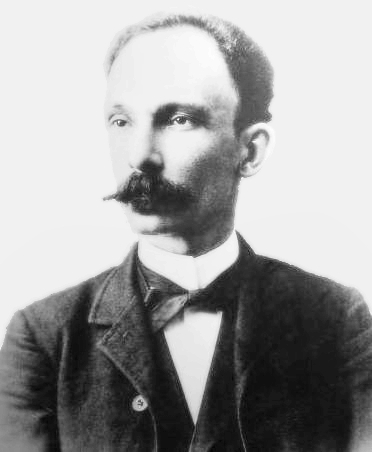
There are two parties in Cuba, the Liberal Autonomist Cuban Constitutional Union of Cuban planters. In 1892 Antonio Maura, Minister of Overseas proposes a self-government for Cuba and the Philippines. Is rejected in Parliament by Cuban pressure and resigned (he was called unpatriotic, fanatic or filibuster). Then there is the figure of José Martí, a poet, lawyer and journalist Cuban exile in the United States when the war failed Long (Ten Years War). His thesis was that war with Spain was "just and necessary." The Cuban Revolutionary Party founded in 1892 and lead the war for independence, which was re-opened within 1895 (Grito de Baire). The failure of the autonomist cause the independence movement, José Martí, Máximo Gómez and Antonio Maceo will
leaders
For U.S. the war in Cuba was even more important than for Spain. It was becoming a world power and did not want an independent Cuba. Earth's military capacity was lower, but not artillery. For its part Cánovas had the position of "raising questions of force, or more properly speaking, do not expect a solution but force." The weakest must bow to the strongest.

Puerto Rico did not pose serious problems, since it had achieved its independence, slavery had been abolished and the economy was headed by a powerful elite that controlled the grassroots movements.

Insurrection Cuban took over in 1895 as a result of relief in the party in power. Sagasta was replaced by Cánovas Martínez Campos sent a peacekeeping hoping to repeat the previous years. During the uprising of 1895 began with the cry of Baire and had been imposed on much of the island, especially in the east. His guerrilla methods was widespread support among the rural population. Its leaders were José Martí, and then Maximo Gomez, who along with Antonio Maceo started the uprising in the eastern part of the island. It became harder. General Weyler was sent very hard in the guerrilla struggle. The procedures used consisted of concentrating the rural population, isolating the rural population of the separatist guerrilla and rebel territory by quoting the barriers or "trail", with undoubted brutality. We also have to have yellow fever, typhoid and malaria.

Cánovas is autonomous reforms, sectors that do not meet his own party (Romero Robledo) or Americans. In May 1897 the U.S. recognized Cuban belligerency, it is permissible to help the insurgents. The assassination of Canovas (1897) changed the situation. Half the island was pacified by the harsh tactics of Weyler, but the action was to come policy. Weyler was replaced by General White was instructed to confine itself to fighting only in areas controlled by the English army. In November, granted a broad amnesty, universal suffrage, equal rights between island and peninsular and tariff autonomy, but the politics of Moret late.

Coinciding with the Cuban insurrection, there was also in the Philippines. The English presence was weak, especially missionaries, and export and use as a snuff trade with China. A key role was as a secret association, the Katipunan (Meeting), founded by Andrew Bonifacio political purposes (independence of the Philippines) and civic (help) but its most important figure is Jose Rizal. The movement was severely repressed and Jose Rizal was eventually executed. Biacnabató pact ended the insurrection. It was U.S. intervention that caused the final uprising of the Filipinos.

The situation changed in the year 1898. The explosion of the "Maine" was attributed to accelerated testing and English without war. U.S. made a proposal to purchase the island for $ 300 million. On April 18 the two chambers of the legislature passed a resolution, an ultimatum to Spain. Cuba was be independent, had to withdraw from the island and authorized the U.S. president. Mac Kinley to mobilize the military mechanisms to achieve these objectives. The document refers to "the horrible conditions there [were] in Cuba [had been] three years, ie since February of 1895 outbreak of the second war for Cuban independence. Argue that it is a duty as a world power as a model of freedom and democracy, by geographical proximity to the island and, above all, the "destruction of a battleship" who was "visiting." The news of this decision was in Spain patriotic demonstrations. War was inevitable.

The "Maine" was actually on the island called by the American consul to protect American citizens resident in the island and its collapse could not be justified, not by Americans or by the English. However, were the major American media moguls (Pulitzer and William Randolph Hearst ) stirred up the indignation that the U.S., "Remember the Maine, the infieno with Spain." U.S.

That gave as an excuse to pacify the island couple involved was evident, and the English government was firm in avoiding conflict and declared a cease-fire .. There were also supporters of U.S. non-intervention. It was not just solidarity with the Cubans, since these do not recognize the independence of Cuba, but only the "right to be free and independent" and only required Spain to abandon the island did not give them the status of nation. Anyway, the U.S. pledged to give up the island (paragraph four). Senator Teller was responsible for this part was it truly humanitarian? Some believe he was defending his state of Colorado, producer of sugar beet against Cuban cane sugar. Anyway Cubans welcomed the American intervention, which had sent arms and ammunition, despite being prohibited.

The war began to have its outcome in the Philippines, where the situation seemed to be dominated by the English. The direct intervention of the Americans decided to expand (Hawaii. ..) crushed the English fleet at Cavite. In Spain, the news received social outcry little political significance.

Regarding Cuba, the English authorities decided to send the fleet of Admiral Cervera, who arrived in May and was blocked in the city of Santiago. The pressure of public opinion and the government's attitude eventually lead to the departure of the fleet and its sinking in early July. Soon after came the surrender of Santiago and in the month August, Washington signed the protocol, equivalent to an armistice.

By the Treaty of Paris (December 1898) Spain ceded the Philippines, Puerto Rico and Guam to the United States and granted independence to Cuba. In the Philippines there was a longstanding guerrilla war against the Americans, who had to maintain an army of occupation. Cuba had a nominal independence for America.

The Treaty of Paris did not mean the complete disappearance of all the old English Empire, but was quickly established. Germany Spain sold the islands of the Marianas, Carolines and Palau (1899). Spain lacked the capacity to act as a colonial power and had to undergo the strongest, who practiced a colonial redistribution. Spain was reduced to the status of small colonizing European power whose prospects were limited to Africa (Morocco, Ifni, Guinea, Fernando Poo), whose strategic interest was to control the Strait


III. CONSEQUENCES OF 98.

a) Policy Implications

No general reactions to the disaster. For the political class was essential to achieve stability of the political system. There was a sector of the Conservative Party (Romero Robledo) that economic interests (land, maritime transport) was favored colonial system maintenance. But there were too many cases of opposition to the war. Neither Carlist or Republicans who favored a settlement illustrated, but they were patriotic demagoguery to the disaster. There were no major institutional changes or state crisis. We used the rhetoric of "regeneration", but changes were not political.

economic interests of the war depended on the relationship with Cuba. Catalan industrial circles were the most stressed in the colony (they sold their tissues), while farmers and miners Basque Spaniards were more reformist. The Church was interested in the Philippines. Sectors popular and workers clashed not strong (no, there was a large number of dropouts). Most were against the PSOE. The anarchists were contradictory. Feds accept Cuba as a more federated state. Basque nationalists were against, and the Catalans were more moderate.

The greatest impact was the official policy of the parties. Silvela government lasted only one and a half, from the moment of defeat and the signing of a peace treaty until early 1901. Silvela represented in the Conservative Party opposite of Romero Robledo, a commitment to transformation and moralization of political life, which will have the expression of regeneration. Report that "Spain without a pulse." His short government showed some willingness to renew, giving tickets to new figures in politics and the general Polavieja (regeneracionista character) or the conservative regionalist Durán and Bas. It began a policy reform, decentralization and fiscal policy that would eliminate the deficit of the war based on raising taxes. This led to increased criticism and strikes, which led to stalled reforms.

b) The regeneracionismo.

The loss of 98 plunged the company into a state of disappointment and frustration, which corresponded to the gloomy image to the outside. The colonial crisis led to the emergence of movements that criticized the system of the Restoration, which coincided with an international cultural environment ideological crisis [1] . After the 98 came a series of moves regenerationists, which received some support from the middle classes.

The best example, with characters like Picavea Macías, is that of Joaquín Costa, denouncing the "oligarchy and despotism, corruption of the system of the Restoration. Called for modernizing the country (hydrographic plan swamps and irrigation) and solve the problems of illiteracy and poverty ("school and pantry "), with land reform (National League of Producers) forgetting the past (take seven keys to the tomb of the Cid"). Other figures of regeneration was Silvela Francisco, the new leader of the Conservative Party and his famous article "Spain without a pulse." This regeneracionismo came to advocate the arrival of a "surgeon with an iron hand" to cut to the chase the corrupt political class.

Cuba's disaster gave cohesion to the Generation of 98, where writers come together from many sources and styles, but with the common bond of a disenchantment with English life (the first modern examples Machado, Vale Inclán and Juan Ramón Jiménez, tragic analysis of Unamuno or sullen Pio Baroja). Pessimism and anxiety about identity, what is Spain? The solution is to Castilla.

Figure Ortega y Gasset is also essential in this atmosphere of pessimism, historicist analysis of vitalism ("I am myself and my circumstance") leads to a concern about the "Invertebrate Spain" (by peripheral nationalist) and "revolt of the masses." Ortega's philosophy comes to raise a certain elitism of people who find their vocation of cultural and political leaders.

Finally, defeat military was a change in the mentality of the military, who were passing to more authoritarian attitudes as a reaction to anti-militarism which followed the "disaster." Convinced that the defeat had been caused by the interference of politicians and the parliamentary

III. International situation (optional)

As regards the U.S., not Cuba be annexed, which was ruined and devastated, but made it their protectorate, occupying military between 1899 and 1902, under the pretext of providing the necessary conditions policy for a solo career. In 1901 the Platt Amendment, authorizing intervention in the island defend when deemed necessary. Was in force until 1934. Cuba achieved its political independence in 1902 and Tomás Estrada Palma became the first president of the Republic of Cuba, but always operated by the United States until Castro's revolution turned to the Soviet bloc.


was an imperialist war, provoked by the United States, in which Spain lost Cuba without the Cubans they won.

[1] are the times of Marx, Nietzsche and Freud, the masters of suspicion. The modes of production are obscured by ideology, lies and truth are only reflections of the will to power and in fact is the unconscious who governs us.